Alle Schlachten

Schlacht bei Muhi

1241 Borsod Feldschlacht

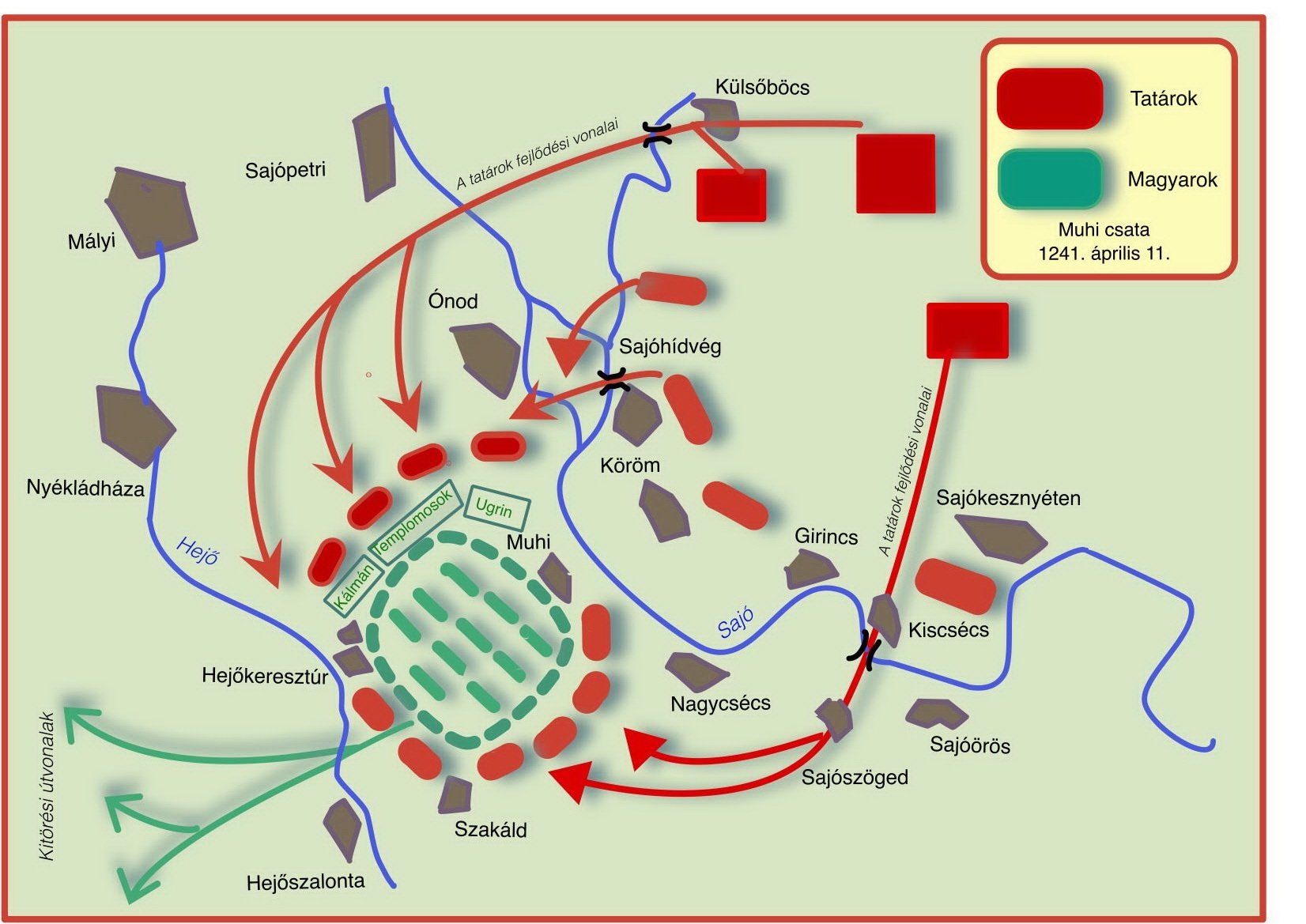
Esquema de la Batalla de Mohi.

Esquema de la Batalla de Mohi.

Author: No machine-readable author provided. Tibicena~commonswiki assumed (based on copyright claims).License:PD
Source
Battle of Mohi 1241 between Hungarians and Mongols

Battle of Mohi 1241 between Hungarians and Mongols

Author: OgodejLicense:CC-BY-SA-4.0
Source
Muhi csata; csak megközelítő pontosságú térkép.
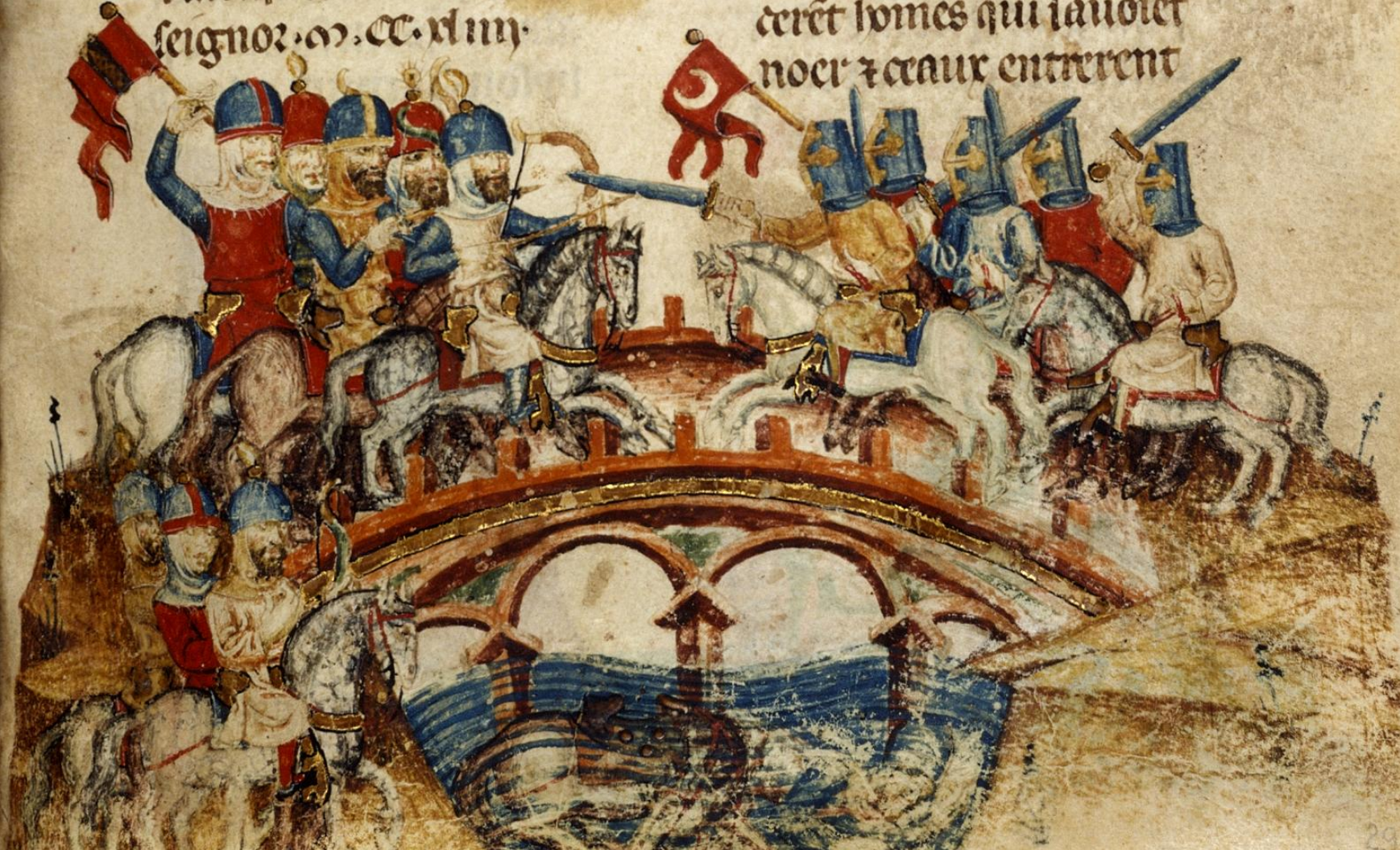
Muhi csata; csak megközelítő pontosságú térkép.

Author: Bánlaky (Breit) JózsefLicense:PD
Source
Miniture from a copy of Hayton of Corycus's La Flor des estoires de la terre d'Orient in the Austrian National Library, illustrating his account of the Battle of Mohi in 1241 between Hungarians and Mongols and the purported drowning of Batu Khan in the river, which is a confused report of the death of the Mongol general known as Ba’atur, who drowned during a crossing of the Sajó, an ignominious reverse despite the Mongols' overall victory. Son cheval fu tant traveillies qu’il ne pout plus, e fu noiez Batho, e grant partie de ses genz dedeins le flume avant que poissent venir a l’autre rive. Quant les Tartars, qui encore n’estoient entrez en l’eive, virent leur seignor Batho e leur compaignies noier, dolens e tristes s’en retournerent au roiaume de Roussie e de Comaine, ne onques puis les Tartars n’entrerent en Alemaigne.— Hayton of Corycus, in: La Flor des estoires de la terre d'Orient
His horse was so exhausted that it could not continue, and Batu was drowned with a great number of his people in the river before they could reach the other bank. When the Tartars who had not yet entered the water saw their lord Batu and their companions drown, they returned mournfully and sadly to the kingdom of Russia and of Cumania; never again did the Tartars invade Germany— trans. Pow, Stephen, "Later Rumors of Mongol Defeat in Europe in the Mid-Thirteenth Century: Batu's Drowning in Austria and the Saint Ladislaus Legend in Russia." Vestnik of Saint Petersburg University History, vol. 70, No. 1, April 2025, pp. 9–10.
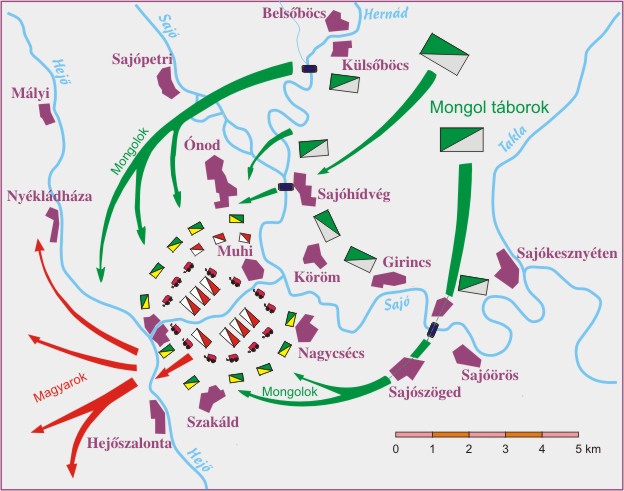
Miniture from a copy of Hayton of Corycus's La Flor des estoires de la terre d'Orient in the Austrian National Library, illustrating his account of the Battle of Mohi in 1241 between Hungarians and Mongols and the purported drowning of Batu Khan in the river, which is a confused report of the death of the Mongol general known as Ba’atur, who drowned during a crossing of the Sajó, an ignominious reverse despite the Mongols' overall victory. Son cheval fu tant traveillies qu’il ne pout plus, e fu noiez Batho, e grant partie de ses genz dedeins le flume avant que poissent venir a l’autre rive. Quant les Tartars, qui encore n’estoient entrez en l’eive, virent leur seignor Batho e leur compaignies noier, dolens e tristes s’en retournerent au roiaume de Roussie e de Comaine, ne onques puis les Tartars n’entrerent en Alemaigne.— Hayton of Corycus, in: La Flor des estoires de la terre d'Orient His horse was so exhausted that it could not continue, and Batu was drowned with a great number of his people in the river before they could reach the other bank. When the Tartars who had not yet entered the water saw their lord Batu and their companions drown, they returned mournfully and sadly to the kingdom of Russia and of Cumania; never again did the Tartars invade Germany— trans. Pow, Stephen, "Later Rumors of Mongol Defeat in Europe in the Mid-Thirteenth Century: Batu's Drowning in Austria and the Saint Ladislaus Legend in Russia." Vestnik of Saint Petersburg University History, vol. 70, No. 1, April 2025, pp. 9–10.

Author: Anonymous illuminationLicense:PD
Source
Battle of Muhi

Battle of Muhi

Author: UnknownLicense:CC-BY-SA-4.0
Source
A muhi csata emlékparkja a levegőből, 2018

A muhi csata emlékparkja a levegőből, 2018

Author: CivertanLicense:CC-BY-SA-4.0
Source
A muhi csata helyszínén épült emlékpark légi fotón 2018-ban

A muhi csata helyszínén épült emlékpark légi fotón 2018-ban

Author: CivertanLicense:CC-BY-SA-4.0
Source
Bataille de Mohi de 1241, légendée en français

Bataille de Mohi de 1241, légendée en français

Author: User:Alex:DLicense:CC-BY-SA-4.0
Source
Battle of Mohi, 1241 (Romanian Legend)

Battle of Mohi, 1241 (Romanian Legend)

Author: Alex:DLicense:CC-BY-SA-4.0
Source
Battle of Mohi, 1241 (English Legend)
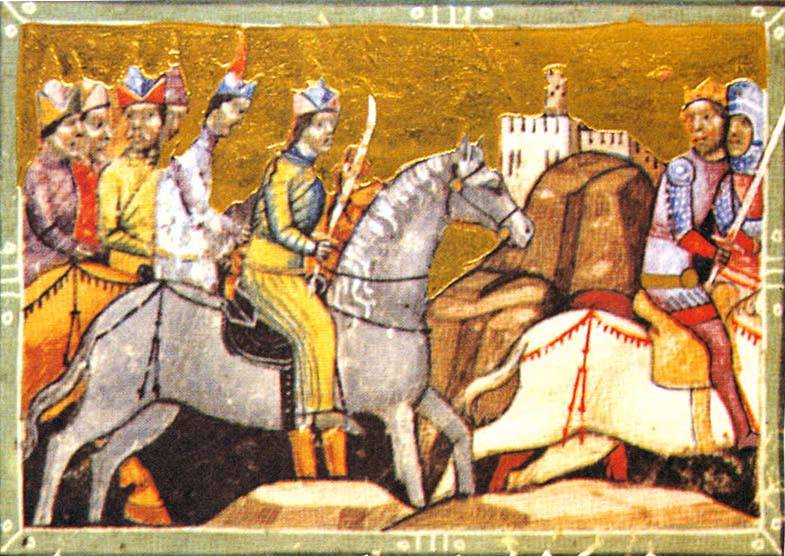
Battle of Mohi, 1241 (English Legend)

Author: Alex:DLicense:CC-BY-SA-4.0
Source
Béla IV flees from Mohi

Béla IV flees from Mohi

Author: Original uploader was User:Mazarin07 at hu.wikipediaLicense:PD
Source
Béla the Fourth, Hungarian King. Relief in Bükkszentkereszt, near to Miskolc, Hungary

Béla the Fourth, Hungarian King. Relief in Bükkszentkereszt, near to Miskolc, Hungary

Author: SzalaxLicense:CC-BY-SA-4.0
Source
Illuminated Chronicle; Chronicon Pictum; Képes Krónika.

Illuminated Chronicle; Chronicon Pictum; Képes Krónika.

Author: Márk KáltiLicense:PD
Source
Illuminated Chronicle; Chronicon Pictum; Képes Krónika.

Illuminated Chronicle; Chronicon Pictum; Képes Krónika.

Author: Márk KáltiLicense:PD
Source
János Mihálovics - Jáno Forgách gives Andrew II his horse during the battle of Mohi, 1241

János Mihálovics - Jáno Forgách gives Andrew II his horse during the battle of Mohi, 1241

Author: János Mihálovics (active c. 1840-1870)License:PD
Source
Burial site at Mohi.

Burial site at Mohi.

Author: Sebastian.mrozekLicense:CC-BY-SA-4.0
Source
The Mongols in Hungary 1241. Hungary. Ink and paint on pergament. Height 25.3 cm, width 32.8 cm. Széchényi National Library, Budapest, fol. 63 recto, Inv. no. Clmae 404 (the picture is of a 19th century reproduction). From the Chronicum Pictum in Hungary's National Library. King Bela on the flight from the Mongols. The Mongol leader might be Qadan, a son of Ögedei.

The Mongols in Hungary 1241. Hungary. Ink and paint on pergament. Height 25.3 cm, width 32.8 cm. Széchényi National Library, Budapest, fol. 63 recto, Inv. no. Clmae 404 (the picture is of a 19th century reproduction). From the Chronicum Pictum in Hungary's National Library. King Bela on the flight from the Mongols. The Mongol leader might be Qadan, a son of Ögedei.

Author: unknown / (of the reproduction) Széchényi National Library, BudapestLicense:PD
Source
Muhi - Memorial park, Hungary, aerialphotography

Muhi - Memorial park, Hungary, aerialphotography

Author: CivertanLicense:CC-BY-SA-4.0
Source
The Mongol invasion in Hungary in Chronica Hungarorum by Johannes de Thurocz

The Mongol invasion in Hungary in Chronica Hungarorum by Johannes de Thurocz

Author: Unknown authorUnknown authorLicense:PD
Source

Historische Übersicht

Die Hauptschlacht der Mongoleninvasion in Ungarn; fast das gesamte ungarische Ritterheer wurde vernichtet.

Fakten auf einen Blick

Ergebnis:Vernichtender mongolischer Sieg.

Mongolisches Reich

  • Befehlshaber: Batu Khan / Subutai
  • Truppenstärke: ca. 30.000 - 50.000
  • Verluste: Moderat

Königreich Ungarn

  • Befehlshaber: Béla IV.
  • Truppenstärke: ca. 50.000 - 80.000
  • Verluste: ca. 30.000 - 50.000

Strategischer Kontext

Vernichtung des stärksten Widerstands in Zentraleuropa zur Eroberung des pannonischen Raums.

Konflikt / Krieg

Mongolische Expansion

Entscheidender mongolischer Sieg; Fall der Jin-Dynastie eingeleitet.

Weiterführende Literatur

Cover of A Distant Mirror: The Calamitous 14th Century

A Distant Mirror: The Calamitous 14th Century

Barbara Tuchman

Sachbuch 14. JahrhundertMittelalter

Englisch
Mittelalter
Cover of The Time Traveller's Guide to Medieval England: A Handbook for Visitors to the Fourteenth Century

The Time Traveller's Guide to Medieval England: A Handbook for Visitors to the Fourteenth Century

MittelalterErzählendes Sachbuch

Englisch
Mittelalter
Cover of The Time Traveller's Guide to Regency Britain: The immersive and brilliant historical guide to Regency Britain

The Time Traveller's Guide to Regency Britain: The immersive and brilliant historical guide to Regency Britain

18. JahrhundertBritische Geschichte19. Jahrhundert

Englisch
Mittelalter
Cover of 1177 v. Chr.: Der erste Untergang der Zivilisation

1177 v. Chr.: Der erste Untergang der Zivilisation

SachbuchWeltgeschichteBronzezeit

Deutsch
Mittelalter
Cover of Byzanz: Die erstaunliche Geschichte eines mittelalterlichen Imperiums

Byzanz: Die erstaunliche Geschichte eines mittelalterlichen Imperiums

SachbuchMittelalterByzanz

Deutsch
Mittelalter
Cover of Das Mittelalter: Europa von 500 bis 1500

Das Mittelalter: Europa von 500 bis 1500

SachbuchMittelalterEuropäische Geschichte

Deutsch
Mittelalter
Cover of Die Karolinger

Die Karolinger

SachbuchEuropäische Geschichte

Deutsch
Mittelalter
Cover of Im Mittelalter: Handbuch für Zeitreisende

Im Mittelalter: Handbuch für Zeitreisende

MittelalterErzählendes Sachbuch

Deutsch
Mittelalter
Cover of Im Rausch des Vergnügens: Eine Reise in das England von Jane Austen und Lord Byron

Im Rausch des Vergnügens: Eine Reise in das England von Jane Austen und Lord Byron

18. JahrhundertBritische Geschichte19. Jahrhundert

Deutsch
Mittelalter
Cover of Militärgeschichte des Mittelalters

Militärgeschichte des Mittelalters

SachbuchMittelalterMilitärgeschichte

Deutsch
Mittelalter
Cover of Nach 1177 v. Chr.: Wie Zivilisationen überleben

Nach 1177 v. Chr.: Wie Zivilisationen überleben

SachbuchWeltgeschichteBronzezeit

Deutsch
Mittelalter
Der ferne Spiegel: Das dramatische 14. Jahrhundert

Der ferne Spiegel: Das dramatische 14. Jahrhundert

Barbara Tuchman

Sachbuch 14. JahrhundertMittelalter

Mittelalter

Historische Orte

Die interaktive Karte erfordert die Zustimmung zu Drittanbieter-Cookies.