Great Northern War

Autopsy of Charles XII of Sweden in 1917

Danish infantry musket 1705

Danish infanteri uniform 1709-1720s
Narva

Altona is set on fire by the Swedish field-colonel Stenbock, between the 8th and 9th of January of 1713, by which about 3000 Churches, houses and warehouses were destroyed.

Andrey Yakovlevich Khilkov 1700-1718

Grafik aus dem Klebeband Nr. 2 der Fürstlich Waldeckschen Hofbibliothek Arolsen Motiv: General Steinbock, unten: Stralsund

Baron Heinrich von der Goltz

Johann Philip Lemke made this painting of an unspecified battle during the Great Northern War, before dying in 1711; the battleships in the background could possibly suggest that it portrays the landing at Humlebæk in 1700.

Battle of Fraustadt (Wschowa). Les Glorieuses Conquestes de Charles, Roy de Suede et la Grande Bataille de Frawstadt Gagnée Contre Le Roy Auguste et le Czar en Fevrier 1706. Francois et Gabriel Landry, Paris, 1707, large uncoloured allegorical engraving on two conjoined sheets, with an inset almanack printed in red & black, 880 x 545 mm, mounted, framed and glazed.

Bishop Mitrophan of Voronezh donating to Peter I for the Azov fleet construction on 1696

Boris Petrovich Sheremetev - parsuna
Note: For documentary purposes the original description has been retained. Factual corrections and alternative descriptions are encouraged separately from the original description.Braherustkammaren, flintlåspistol, 1600-tal. Nyckelord: Flintlåspistol, Braherustkammaren, Föremålsbild

Charles XII's crossing of the Düna, where he defeated a numerically superior Saxon force under Adam Heinrich von Steinau.
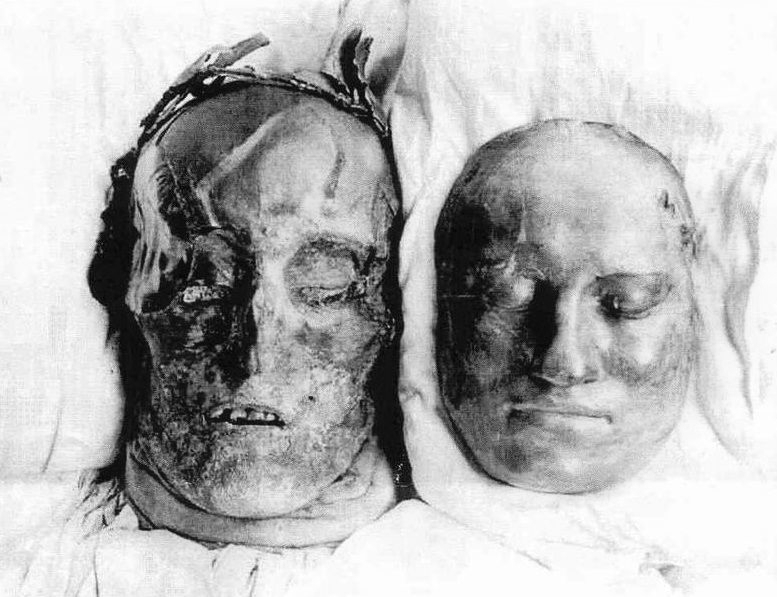
Photograph from July 1917 of the face of the corpse of Charles XII of Sweden with his 1718 death mask laid beside him. The comparison shows how much the king's body had decomposed after nearly 200 years.

"Plan af Hans Kongl: Mayts Konung Carl, Den 12 tes hus, vid Byen Warnitza.". Planritning till "Kungshuset", som började uppföras i aug 1711.
Note: For documentary purposes the original description has been retained. Factual corrections and alternative descriptions are encouraged separately from the original description.dosa m kula - LRK 969
Note: For documentary purposes the original description has been retained. Factual corrections and alternative descriptions are encouraged separately from the original description.dosa m kula - LRK 969, lock
Note: For documentary purposes the original description has been retained. Factual corrections and alternative descriptions are encouraged separately from the original description.Dosa med kula.
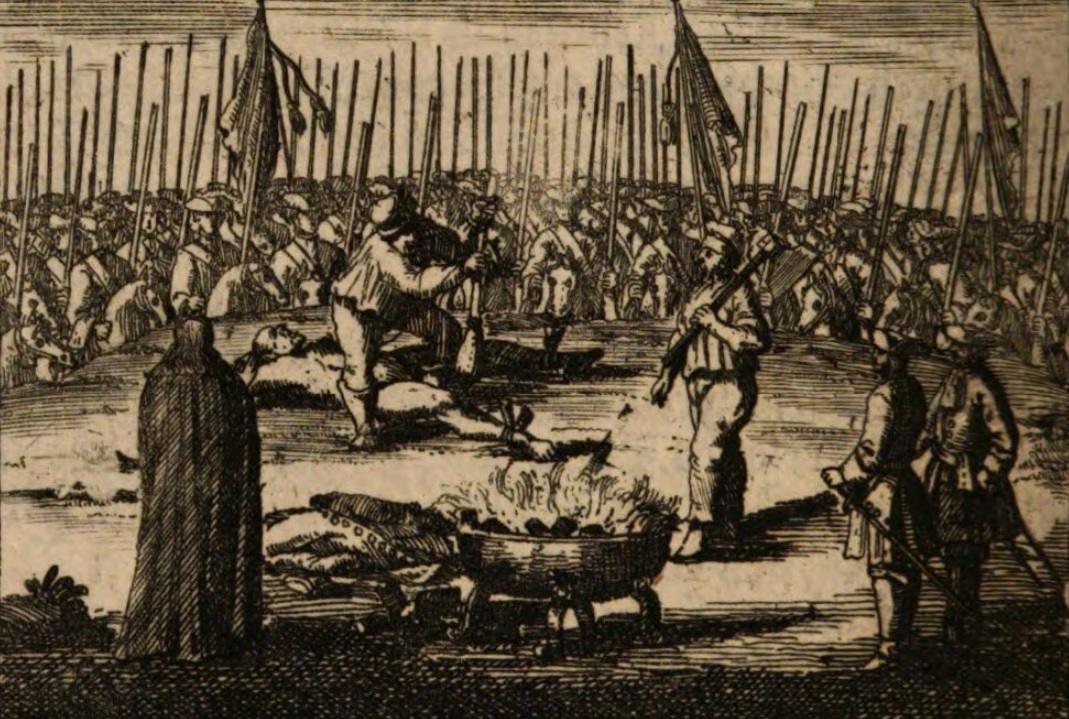
Patkul was born in Swedish Livonia in 1660. In 1694, he was sentenced to death by Charles XI of Sweden after having protested against the king's reduction in Livonia, but fled the country. He subsequently began conspiring against his country of birth, being one of the main figures in the creation of the anti-Swedish coalition in the Great Northern War - to have Swedish Livonia returned to the Polish-Lithuanian Commonwealth. In 1706, he was handed over to Charles XII following a Swedish invasion of Saxony, which forced the elector and king, Augustus the Strong, to admit defeat and abandon the coalition. In 1707, he was broken alive on the wheel for being a traitor to Sweden.

Hinrichtung von Otto Arnold von Paykull

Toruń's fortifications 1703
Note: For documentary purposes the original description has been retained. Factual corrections and alternative descriptions are encouraged separately from the original description.Fredrik I:s dosa med kula.

Great Northern War Collage of important events, from left to right: Battle of Narva, 1700 (Otto August Mankell, made in 1870). The first major battle of the war resulted in a complete Russian withdrawal out of Swedish Ingria, allowing Charles XII of Sweden to turn his forces against Augustus the Strong of Poland and Saxony. Battle of Warsaw, 1705 (anonymous contemporary plate). In 1704, Augustus was dethroned in favor of Stanisław Leszczyński, following a Swedish invasion. To prevent the coronation of the new king at Warsaw, a 9,500-man large Saxon–Polish–Lithuanian army was sent to destroy the much smaller Swedish force protecting it. The allies, however, were defeated in the ensuing battle. The king could then be crowned Stanisław I, and a peace treaty between Poland and Sweden was signed. Battle of Poltava, 1709 (Pierre-Denis Martin, made in 1726). After having forced Augustus to surrender following an invasion of Saxony, in 1706, Charles XII launched an invasion to deal with his last enemy, Peter I of Russia. The two rulers met in battle after more than a year of campaigning, which ended in a disastrous Swedish defeat, turning the tide of the war. Battle of Gadebusch, 1712 (Magnus Rommel, made circa 1712). Both Denmark–Norway and Saxony reentered the war after Poltava, forcing the Swedes to go on the defensive. Their German dominions were soon attacked; to relieve them, a new Swedish army was raised and landed in Swedish Pomerania. At Gadebusch, the Danes and Saxons suffered a heavy tactical blow, but the strategic results were meager; the Swedish army was trapped and destroyed at Tönningen the following year. Bringing Home the Body of King Charles XII, 1718 (Gustaf Cederström, made 1878). Swedish Finland fell in 1714, after a Russian invasion, while the last Swedish stronghold in Germany surrendered in 1716. To regain the initiative, Charles XII launched an invasion of Norway in 1718. The king was shot dead during the Siege of Fredriksten, and his body was carried back home to Sweden. After his death, Sweden lost all initiative in the war; it finally ended in 1721, as peace was established in the Treaty of Nystad.

Great Northern War Collage: Battle of Narva 1700; the first major battle of the war, resulting in a complete Russian withdrawal out of Swedish Ingria which allowed Charles XII of Sweden to turn his forces against Augustus the Strong of Poland and Saxony. Crossing of the Düna 1701; Charles XII defeats the Saxons on the opposite bank of the river Düna, after which he conquers Courland and prepares for an invasion of Poland. Battle of Poltava 1709; after having forced Augustus to surrender following the invasions of Poland and Saxony, Charles XII launches an invasion of Russia to deal with his last enemy, Peter the Great. After more than a year of campaigning, the two rulers met at Poltava where Charles XII suffered a disastrous defeat which turned the tide of the war. Battle of Gadebusch 1712; following the Battle of Poltava, both Denmark–Norway and Saxony reentered the war. The Swedish German dominions were soon attacked, urging Sweden proper to send a relief army. At Gadebusch 1712, the Danes and Saxons suffered a heavy blow but the Swedish army was subsequently trapped and destroyed at Tönning the following year. "Bringing Home the Body of King Charles XII" 1718; Swedish Finland fell to the Russians in 1714, while the last Swedish continental stronghold surrendered in 1716. To regain the initiative, Charles XII launched an invasion of Norway in 1718. The king was shot dead during the Siege of Fredriksten and his body was carried back home to Sweden. After his death, Sweden lost all initiative in the war, which ended with the Treaty of Nystad in 1721.

Timeline of the main factions participating in the Great Northern War 1700-1721
Historical Overview
In the Great Northern War (1700–1721) a coalition led by Russia successfully contested the supremacy of Sweden in Northern, Central and Eastern Europe. The initial leaders of the anti-Swedish alliance were Peter I of Russia, Frederick IV of Denmark–Norway and Augustus II the Strong of Saxony-Poland-Lithuania. Frederick IV and Augustus II were defeated by Sweden, under Charles XII, and forced out of the alliance in 1700 and 1706, respectively, but rejoined it in 1709 after the defeat of Charles XII at the Battle of Poltava. George I of Great Britain and the Electorate of Hanover joined the coalition in 1714 for Hanover and in 1717 for Britain, and Frederick William I of Brandenburg-Prussia joined it in 1715.
Key Battles
Battle of Narva
1700Estland
Crossing of the Düna
1701Lettland
Battle of Fraustadt
1706Polen
Battle of Lesnaya
1708Belarus
Battle of Poltava
1709Ukraine
Battle of Gangut
1714Finnland
Outcome & Quick Facts
Outcome
Overwhelming Swedish victory.