Genpei War
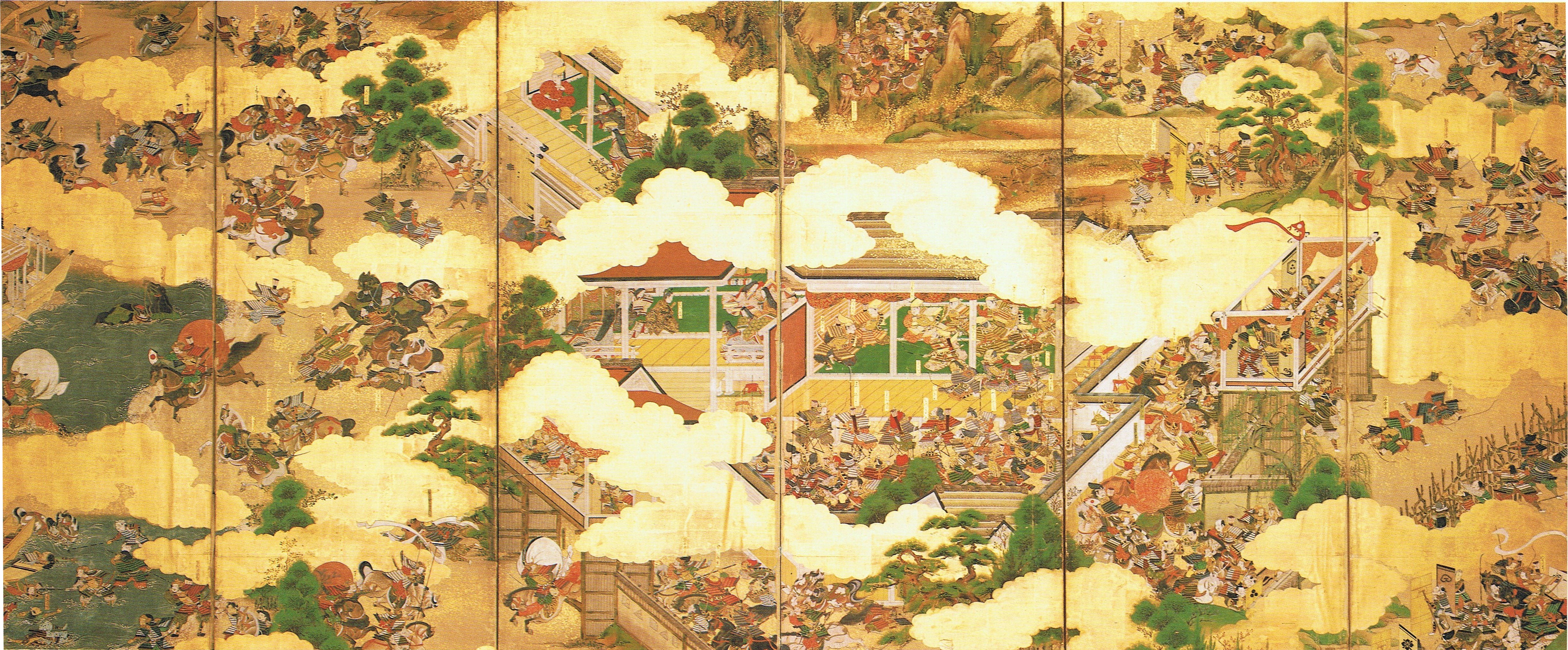
"Genpei Battle Screen" Left screen with six leaves (of a pair), H. 61.6; L. 153 cm. Scene from the Genpei War (1180-1185). Kano Motonobu, (1476-1569), Muromachi period (1336 and 1573). Akama-jingū shrine collection.
![The Battle of Yashima [left of a pair of Scenes from the Tale of the Heike], mid 17th century. Ink, color, gold, and silver on paper. These screens illustrate two battles of the epochal Genpei War (1180–85) as narrated in the Tales of the Heike, an epic semihistorical account of two rival clans’ fight for control of Japan, written in the early 1200s. Each screen narrates a single battle through a number of small episodes divided and framed by gold clouds, landscape elements, and architectural spaces. The right screen shows scenes related to the Battle of Ichi-no-Tani (March 20, 1184), during which the Minamoto clan, identified by the white banners they carry, made a daring attack on the rival Taira clan at a Taira stronghold. The left screen shows the Battle of Yashima (March 22, 1185), another defeat for the Taira. The devastating war came to an end only a month later with the victory of the Minamoto, who took the title shogun, thus becoming Japan’s first military rulers.](https://upload.wikimedia.org/wikipedia/commons/4/48/Battle_of_Yashima_Folding_Screens_Kano_School.jpg)
The Battle of Yashima [left of a pair of Scenes from the Tale of the Heike], mid 17th century. Ink, color, gold, and silver on paper. These screens illustrate two battles of the epochal Genpei War (1180–85) as narrated in the Tales of the Heike, an epic semihistorical account of two rival clans’ fight for control of Japan, written in the early 1200s. Each screen narrates a single battle through a number of small episodes divided and framed by gold clouds, landscape elements, and architectural spaces. The right screen shows scenes related to the Battle of Ichi-no-Tani (March 20, 1184), during which the Minamoto clan, identified by the white banners they carry, made a daring attack on the rival Taira clan at a Taira stronghold. The left screen shows the Battle of Yashima (March 22, 1185), another defeat for the Taira. The devastating war came to an end only a month later with the victory of the Minamoto, who took the title shogun, thus becoming Japan’s first military rulers.

Battle of Yashima folding screens (left side) from The Tale of Heike, late 16th century. The right side (not visible here) shows the battle of Ichinotani.

Estampe du XVIIIem siècle illustrant une phase de la Guerre de Genpei. Un samouraï utilise un éventail de guerre.

Screen of right to six leaves (of a pair). Scene of the Genpei war (1180-1185). Kano Motonobu, (1476-1569), Muromachi period (1336 and 1573).

Margaret Dovaston - An Incident in the Japanese War of the Roses
Historical Overview
The Genpei War was a national civil war between the Taira and Minamoto clans during the late Heian period of Japan. It resulted in the downfall of the Taira and the establishment of the Kamakura shogunate under Minamoto no Yoritomo, who appointed himself as Shōgun in 1192, governing Japan as a military dictator from the eastern city of Kamakura.
Key Battles
Outcome & Quick Facts
Outcome
Taira victory; ritual suicide of Yorimasa.
Related Literature


1177 v. Chr.: Der erste Untergang der Zivilisation

Byzanz: Die erstaunliche Geschichte eines mittelalterlichen Imperiums

Das Mittelalter: Europa von 500 bis 1500

Die Karolinger

Im Mittelalter: Handbuch für Zeitreisende

Im Rausch des Vergnügens: Eine Reise in das England von Jane Austen und Lord Byron

Militärgeschichte des Mittelalters

Nach 1177 v. Chr.: Wie Zivilisationen überleben
Der ferne Spiegel: Das dramatische 14. Jahrhundert
Barbara Tuchman