Battle of Tewkesbury
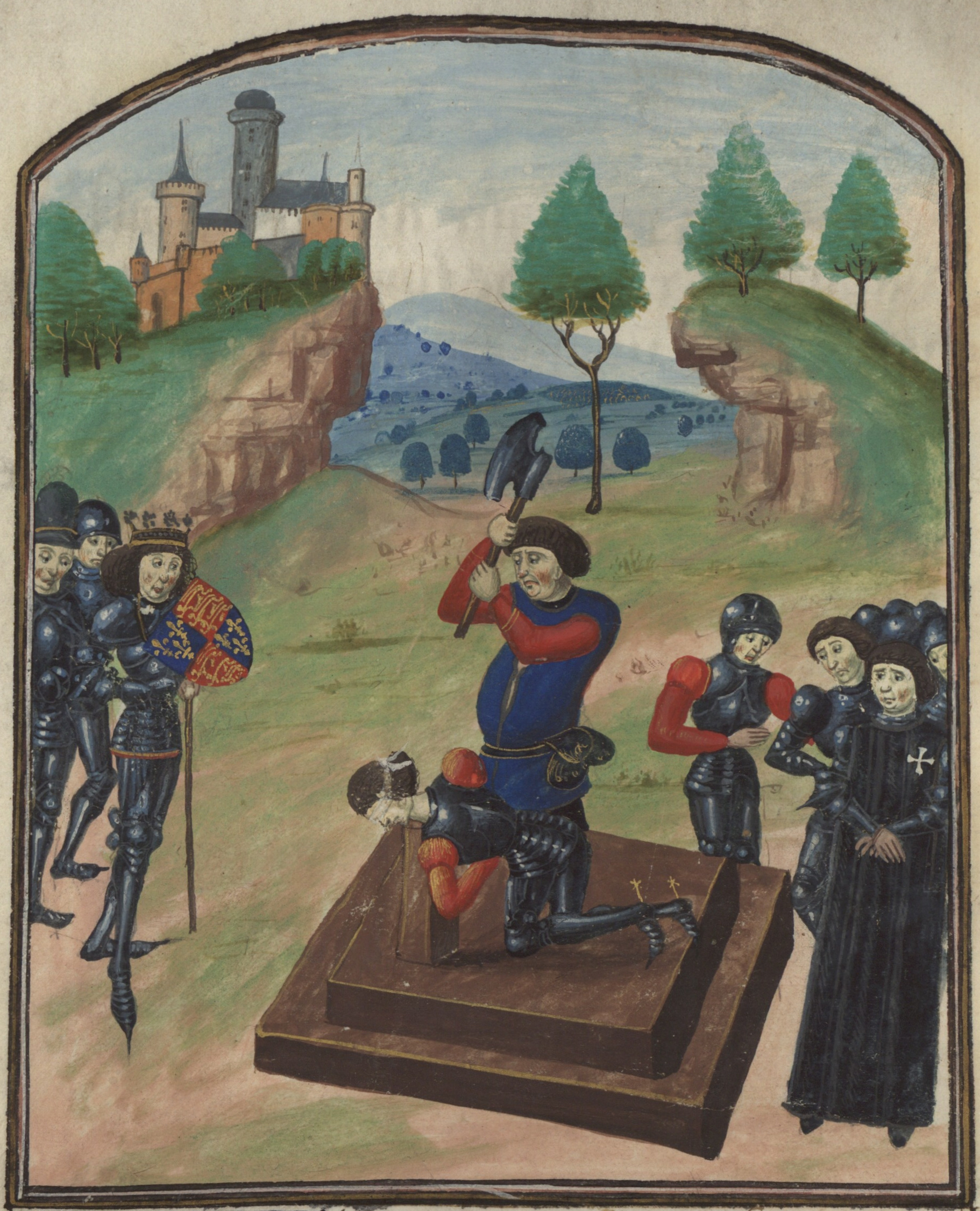
Beheading of the Edmund Beaufort, 4th Duke of Somerset in 1471 at Tewkesbury. Edward IV watches. Illuminated miniature from Histoire de la rentrée victorieuse du roi Edouard IV en son royaume d'Angleterre
Image for battles of the Wars of the Roses where York was victorious.
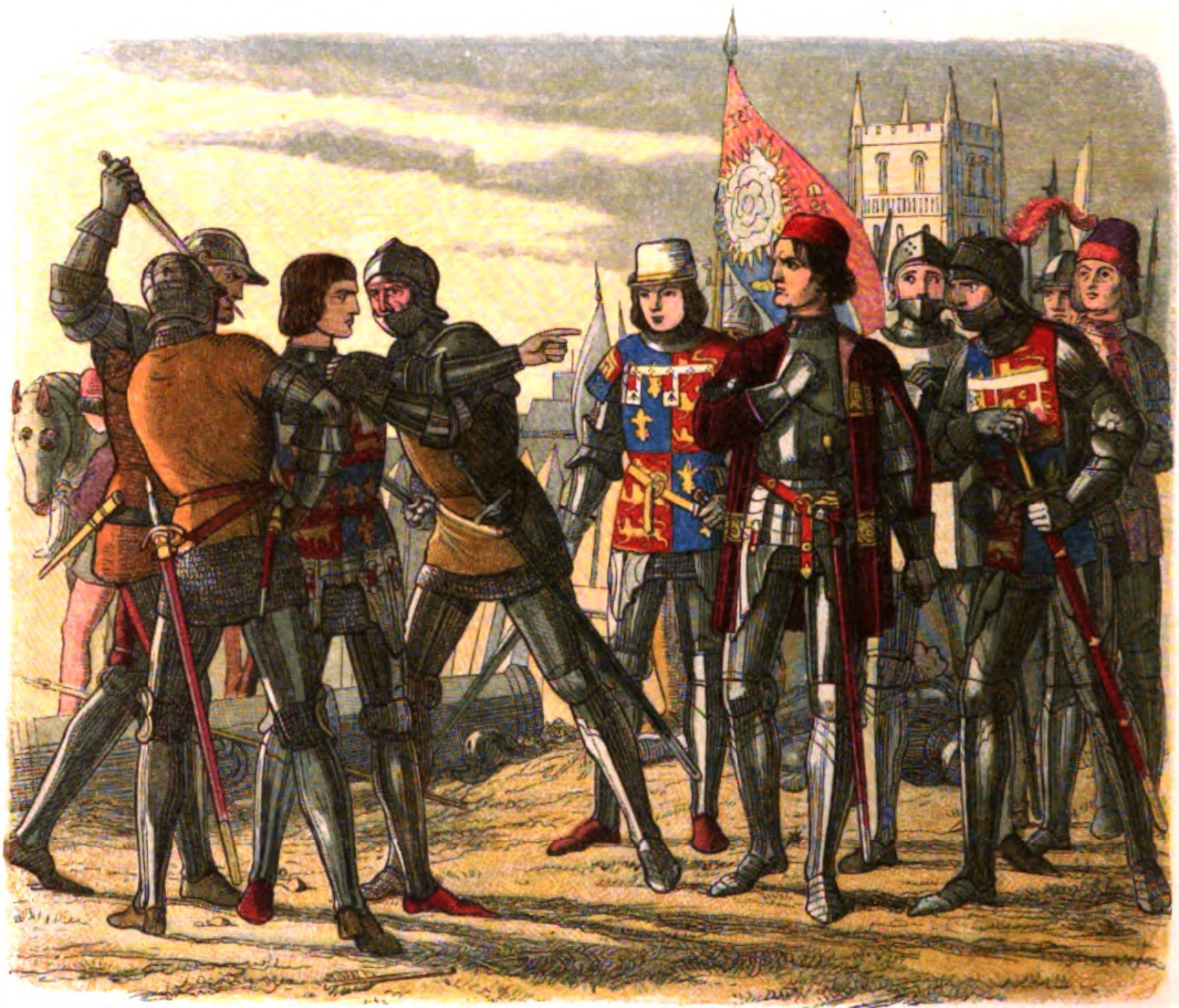
Edward of Westminster, Prince of Wales, is brought to Edward IV for questioning in the aftermath of the Battle of Tewkesbury. Edward's brothers, Richard (on the king's right) and George (left), along with Lord Hastings, stand near the king.
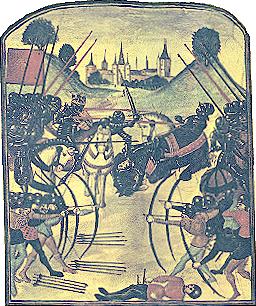
Battle tewkesbury

Edward IV presides over the execution of the Duke of Somerset, Edmund Beaufort
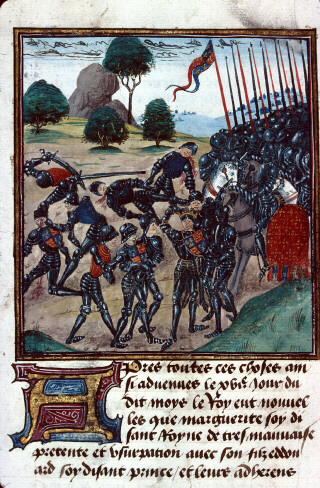
Edward IV raises his gauntlet in victory, as Henry VI's son, the Prince of Wales, is brought to him

The queen, on a white palfrey, guarded by numerous men-at-arms, is riding across a level meadow; the walls and abbey of Tewkesbury seen in the distance; cloudy sky. (From p. 26 of a Royal Academy of Arts exhibition catalogue published by Wm. Clowes and Sons in 1901.)

The queen, on a white palfrey, guarded by numerous men-at-arms, is riding across a level meadow; the walls and abbey of Tewkesbury seen in the distance; cloudy sky. (From p. 26 of a Royal Academy of Arts exhibition catalogue published by Wm. Clowes and Sons in 1901.)

Map for the Battle of Tewkesbury

The Battle of Tewkesbury, as illustrated in the Ghent manuscript
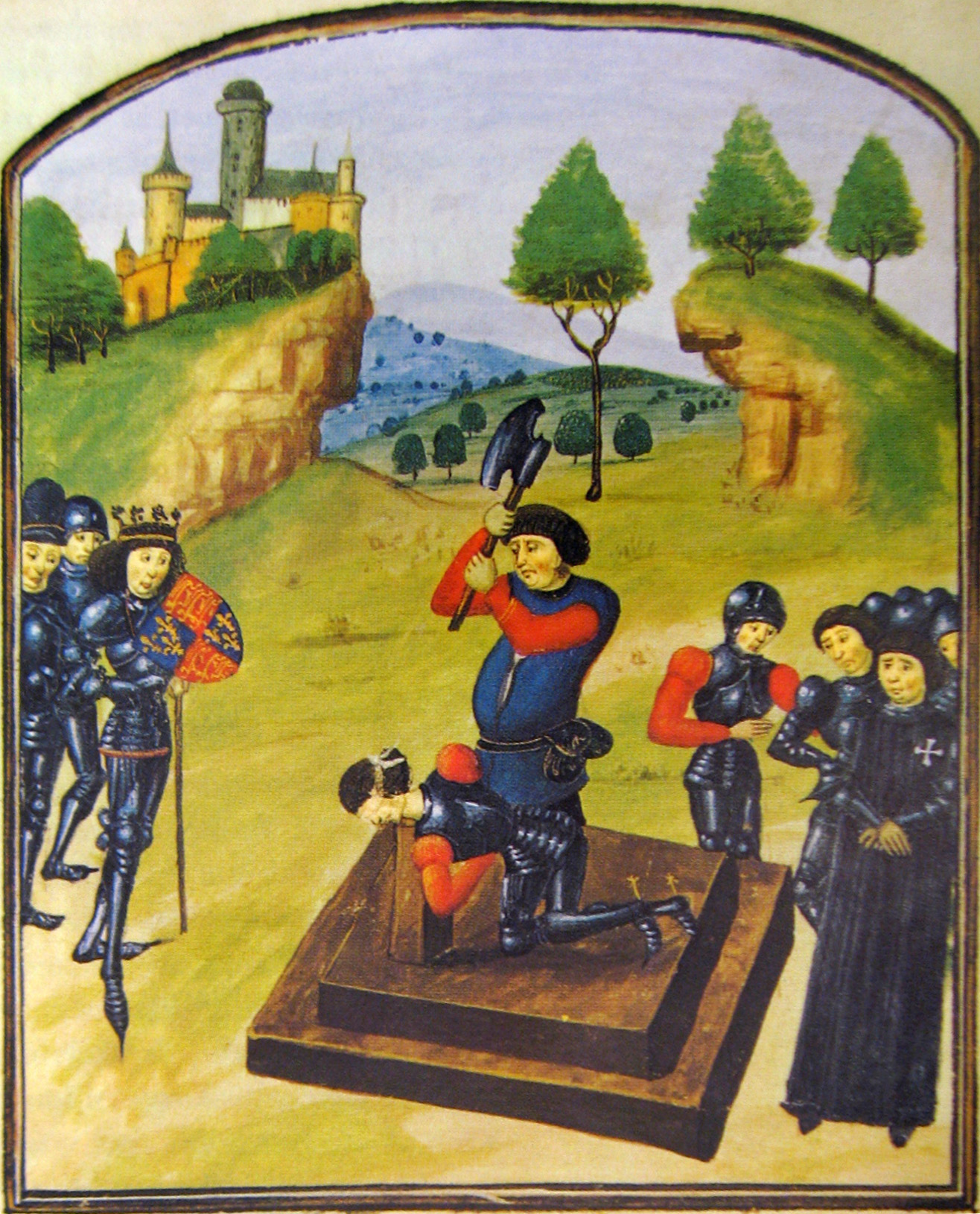
Illustration of the beheading of Edmund Beaufort, 4th Duke of Somerset in 1471 at Tewkesbury. Edward IV watches.

Colour plate from Pictures of English History (c. 1850), depicting the Battle of Tewkesbury; this was published in:"Plates I to IV" in (1868) Pictures of English History: From the Earliest Times to the Present Period (2 of set of 4 ed.), London: George Routledge and Sons Retrieved on 14 January 2011.

King Edward IV and his Yorkist troops are beseeched by a priest to stop the pursuit of their Lancastrian foes who have requested sanctuary from the abbey.
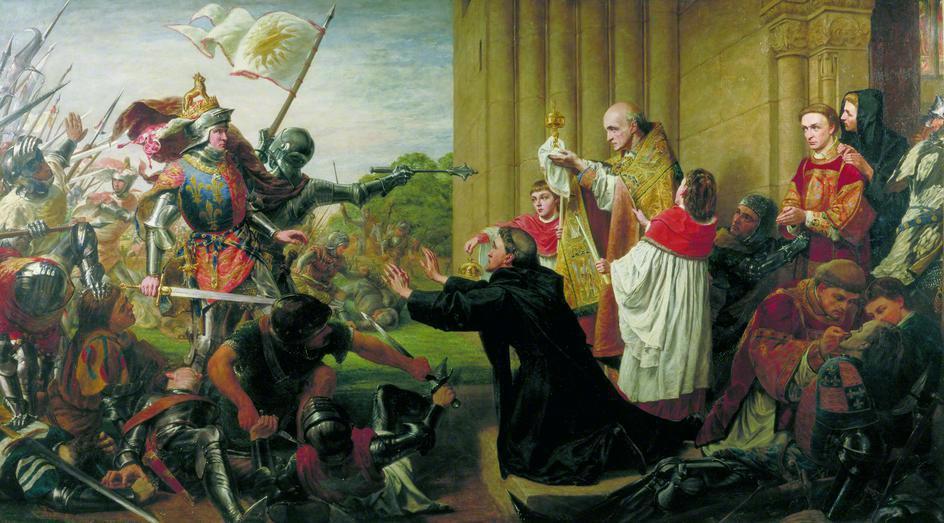
King Edward IV and his Yorkist troops are beseeched by a priest to stop the pursuit of their Lancastrian foes who have requested sanctuary from the abbey.

King Edward IV and his Yorkist troops are beseeched by a priest to stop the pursuit of their Lancastrian foes who have requested sanctuary from the abbey.

The Battle of Tewkesbury, as illustrated in the Ghent manuscript

The Prince of Wales Brought Before Edward IV After The Battle of Tewkesbury

The Prince of Wales Brought Before Edward IV After The Battle of Tewkesbury
Historical Overview
The Battle of Tewkesbury was one of the most decisive battles of the Wars of the Roses in England. King Edward IV and his forces loyal to the House of York completely defeated those of the rival House of Lancaster. The Lancastrian heir to the throne, Edward of Westminster, Prince of Wales, and many prominent Lancastrian nobles were killed during the battle or executed after it. The Lancastrian king, Henry VI, who was a prisoner in the Tower of London, died shortly after the battle, likely murdered, although the official cause was stated as being of 'great melancholy'. Tewkesbury restored political stability to England until the death of Edward IV in 1483.
Quick Facts
House of York
- Commander: Edward IV.
- Strength: ca. 5.000
- Casualties: Gering
House of Lancaster
- Commander: Edmund Beaufort †
- Strength: ca. 6.000
- Casualties: ca. 2.000
Strategic Context
Queen Margaret's attempt to place her son on the throne.
Conflict / War
Wars of the Roses
Related Literature

Der Bauernkrieg: Deutschlands großer Volksaufstand

Lexikon der Renaissance
Historical Locations
Interactive map requires third-party cookie consent.