Battle of Pharsalus

Battle of Pharsalus, 48 BC

No description

Battle of Pharsalus, 48 BC (Phase 1)

Battle of Pharsalus, 48 BC (Phase 2).

translation to Hebrew of Image:Battle of Pharsalus, 48 BC.gif
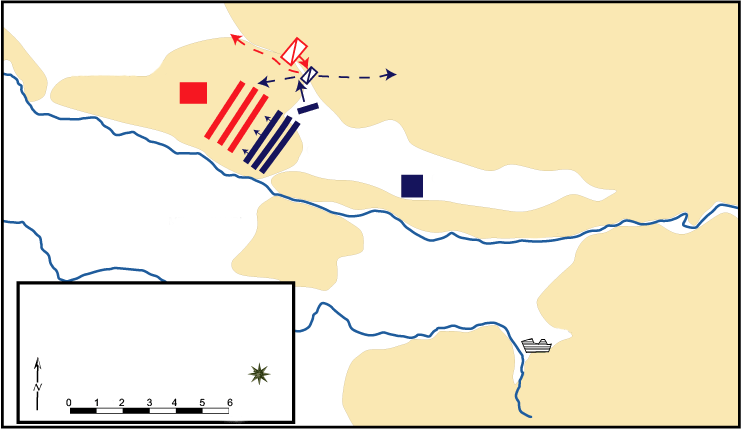
La Battaglia di Farsalo, versione senza scritte
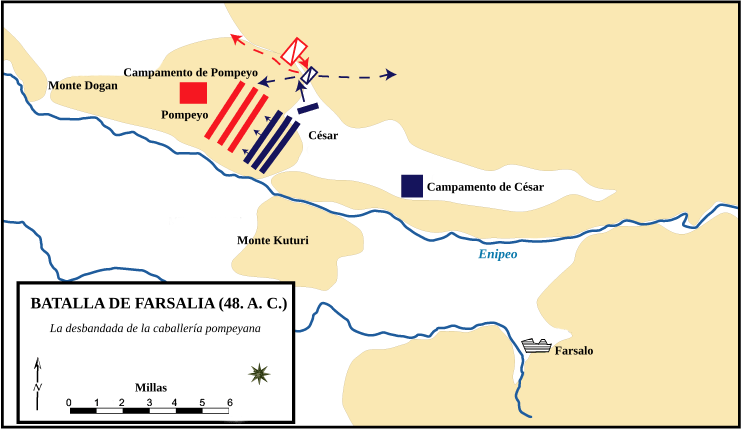
La maniobra decisiva de la batalla de Farsalia: la desbandada de la caballería de Pompeyo.

La Battaglia di Farsalo, traduzione di fonte
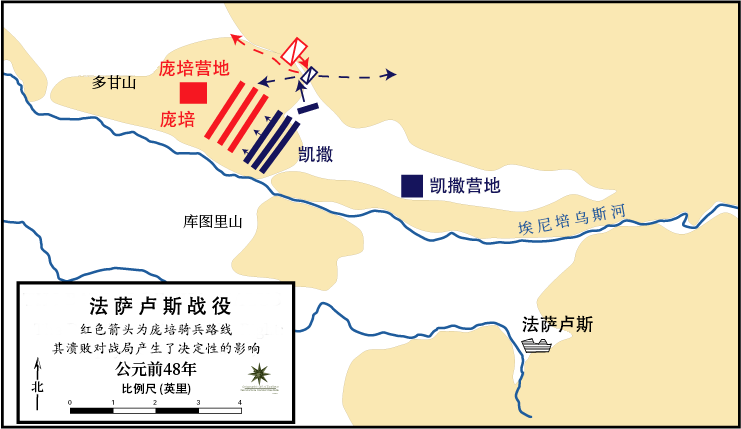
法萨卢斯战役

Formation of battle lines for the Battle of Pharsalus, 48 BC Created based on Plutarch: Caesar, c. 44; in Plutarch, Roman Lives, trans. Robin Waterfield, ISBN 9780192825025
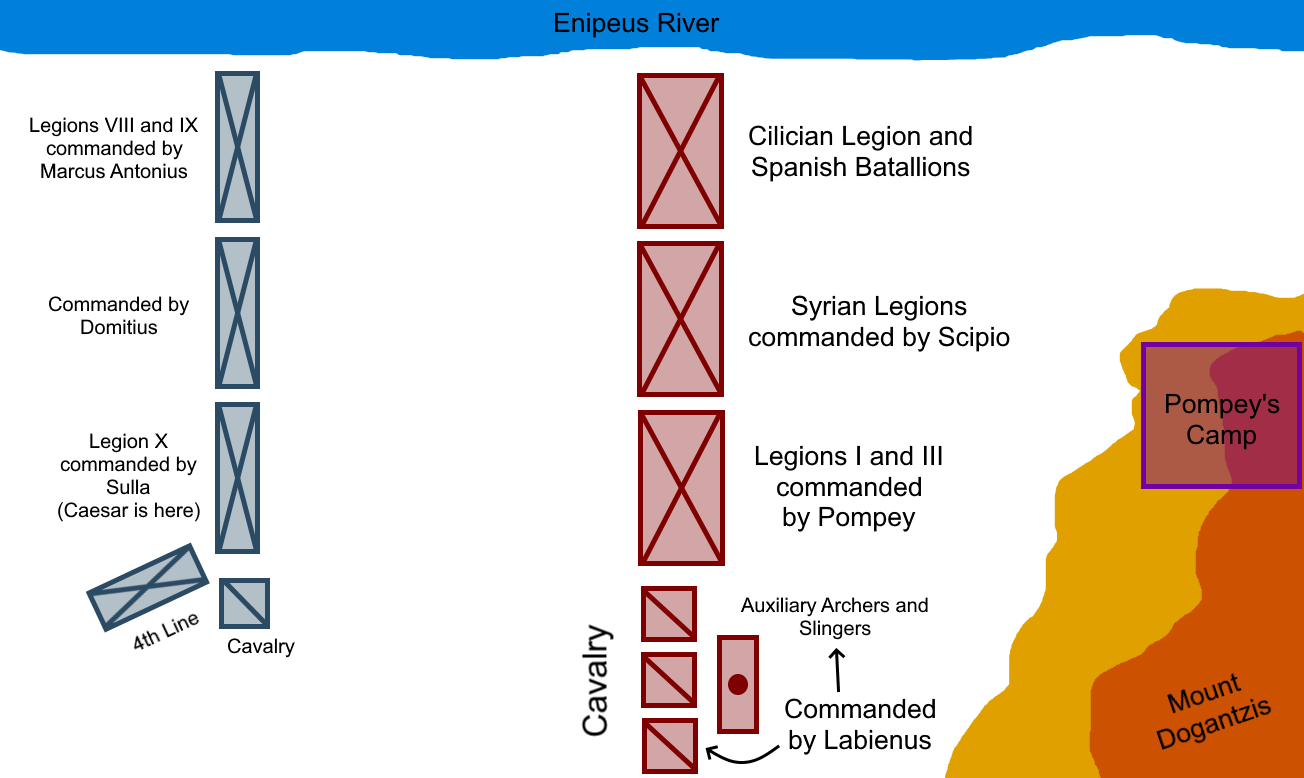
The positioning of troops at the battle of Pharsalus.
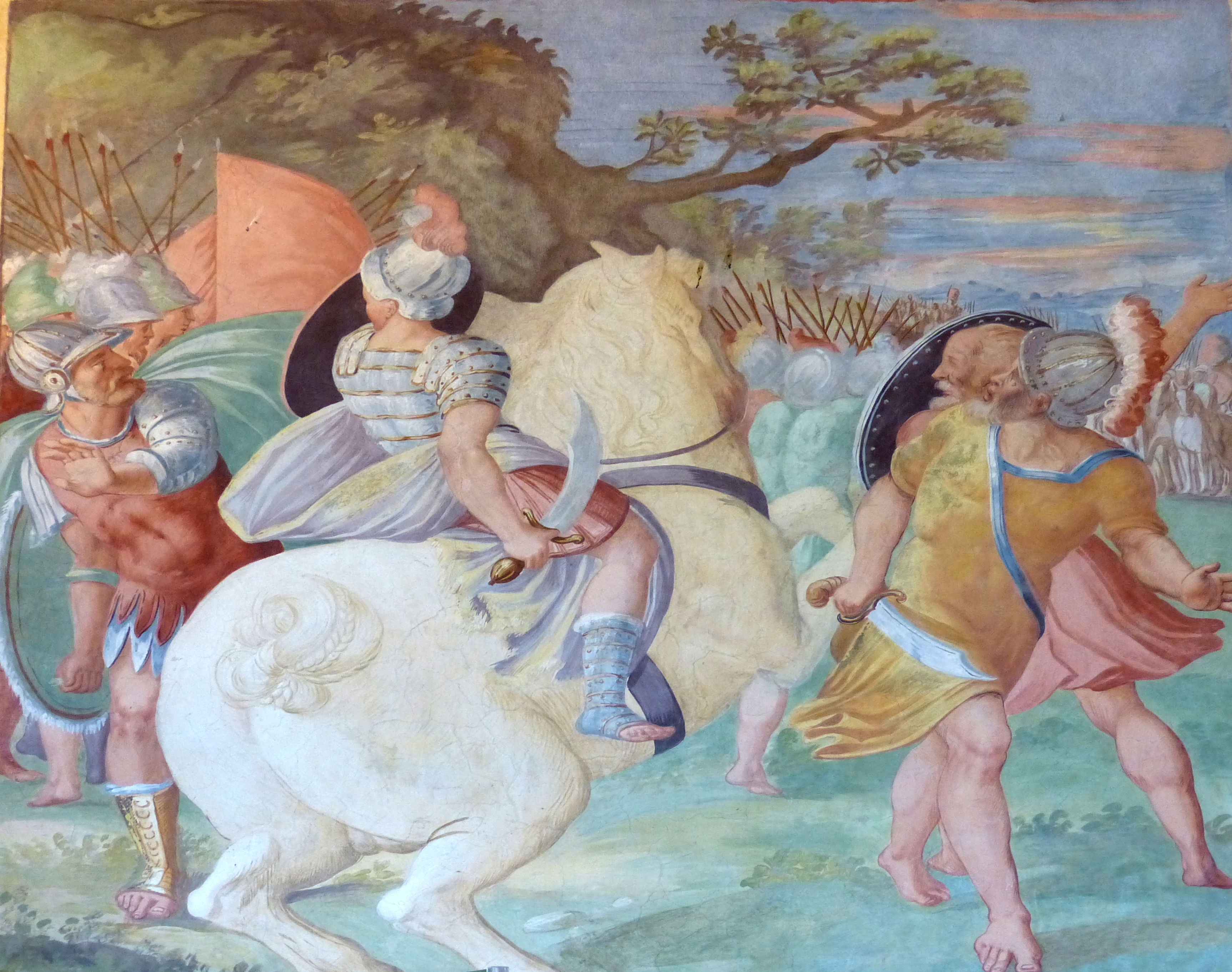
Castiglione del Lago ( Umbria ). Corgna palace (1563 ) - Marquess Diomede's study: Fresco showing the Battle of Pharsalus after the biography by Suetonius.

Caesar's campaign in Greece.

Flight of Pompey from the battlefield of Pharsalus (Cassell's Illustrated Universal History, vol. 3, 1882)

No description
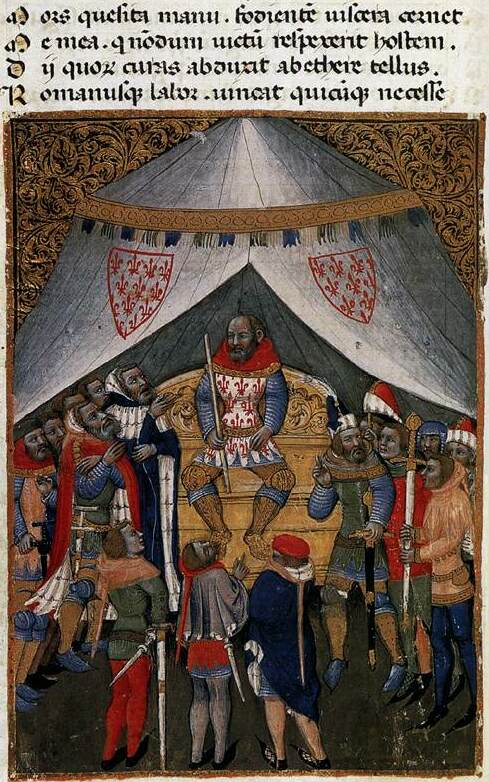
Lucanus: De bello civili (Pharsalia) Lucan (born A.D. 39 in Cordoba, Spain), brother of the famous Stoic philosopher Seneca, was well-known as a writer and moved in the circles close to the Emperor Nero. In A.D. 62 or 63 he published the first three books of his epic poem composed in hexameters, De bello civili (Greek: Pharsalia), in which he describes the civil war between Caesar and Pompey. Lucan's work was much read in the Middle Ages and in the wake of the Italian humanism of the Trecento. The present version of De bello civili was completed in 1373 in Bologna. Its illustrations by Niccolò da Bologna show the typical characteristics of the Bolognese school of manuscript illumination, which produced attractive paintings with spontaneous touches, and a naturalism that repeatedly pushes purely decorative elements into the background. The miniature on folio 86v shows Caesar, the victor over Pompey at the Battle of Pharsalos. The artist shows the scene from a bird's eye perspective and succeeds in creating a consistent representation of space.

Lucanus: De bello civili (Pharsalia) Lucan (born A.D. 39 in Cordoba, Spain), brother of the famous Stoic philosopher Seneca, was well-known as a writer and moved in the circles close to the Emperor Nero. In A.D. 62 or 63 he published the first three books of his epic poem composed in hexameters, De bello civili (Greek: Pharsalia), in which he describes the civil war between Caesar and Pompey. Lucan's work was much read in the Middle Ages and in the wake of the Italian humanism of the Trecento. The present version of De bello civili was completed in 1373 in Bologna. Its illustrations by Niccolò da Bologna show the typical characteristics of the Bolognese school of manuscript illumination, which produced attractive paintings with spontaneous touches, and a naturalism that repeatedly pushes purely decorative elements into the background. The miniature on folio 86v shows Caesar, the victor over Pompey at the Battle of Pharsalos. The artist shows the scene from a bird's eye perspective and succeeds in creating a consistent representation of space.

The first phase of the battle of Pharsalus
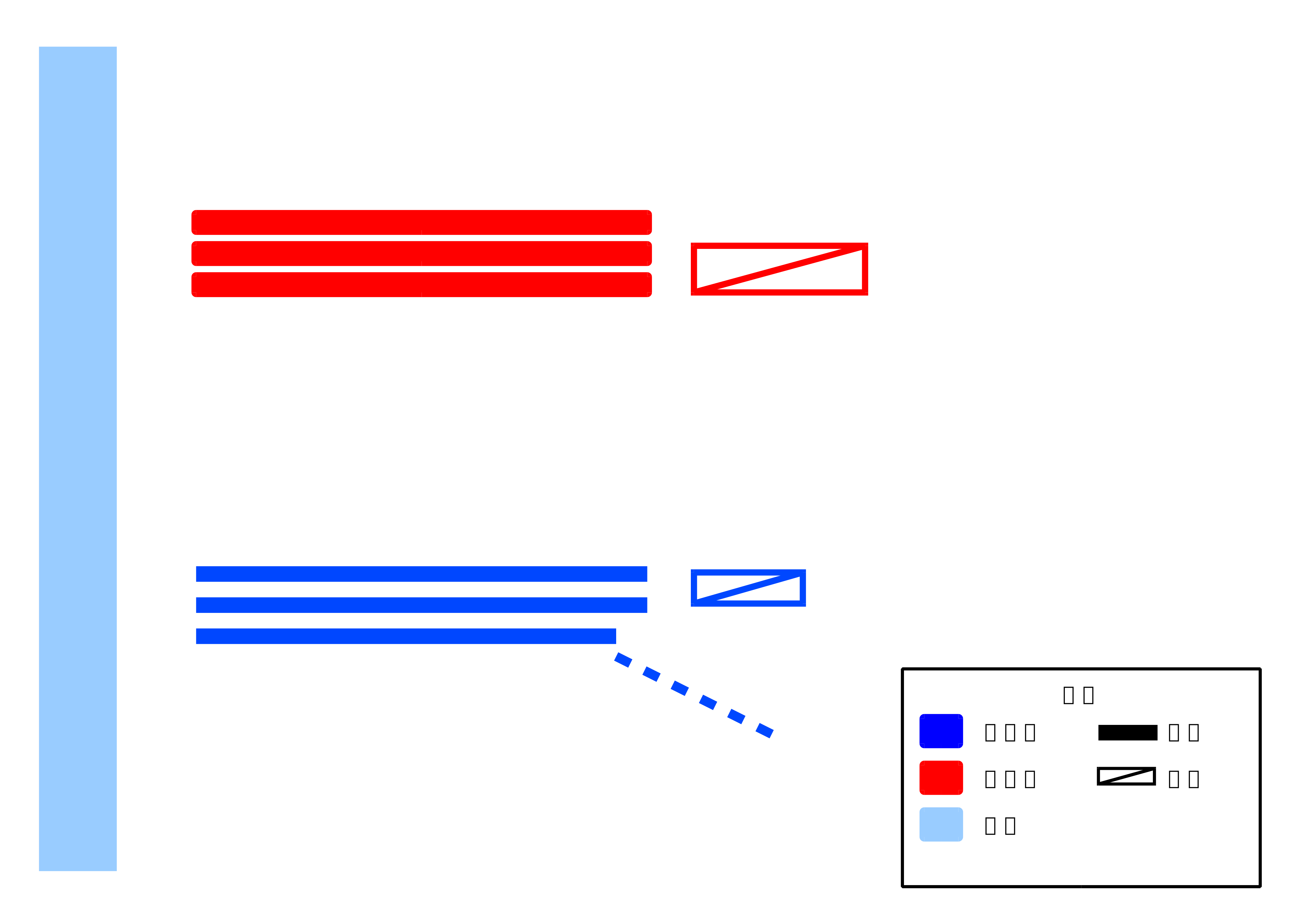
Battle of Pharsalus: Deployment
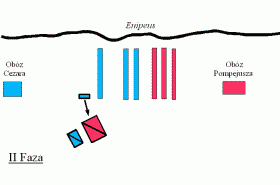
The second phase of the battle of Pharsalus
Historical Overview
The Battle of Pharsalus was the decisive battle of Caesar's Civil War fought on 9 August 48 BC near Pharsalus in Central Greece. Julius Caesar and his allies formed up opposite the army of the Roman Republic under the command of Pompey. Pompey had the backing of a majority of Roman senators and his army significantly outnumbered the veteran Caesarian legions.
Quick Facts
Caesarians
- Commander: Julius Caesar
- Strength: ca. 22.000 Infanterie / 1.000 Kavallerie
- Casualties: ca. 200 - 1.200
Optimates (Pompeians)
- Commander: Pompejus Magnus
- Strength: ca. 45.000 Infanterie / 7.000 Kavallerie
- Casualties: ca. 6.000 - 15.000
Strategic Context
Final confrontation between Rome's two greatest generals for absolute supremacy over the state.
Conflict / War
Caesar's Civil War
Related Literature


Auf dem Weg zum Imperium: Eine Geschichte der römischen Armee

Aufstieg und Fall des Alten Ägypten: Die Geschichte einer geheimnisvollen Zivilisation vom 5. Jahrtausend v. Chr. bis Kleopatra

Caesar lässt grüßen: Die Geschichte der Römer

Das alte Griechenland: Die visuelle Geschichte. Hochwertiger Bildband mit über 850 Fotos

Das frühe Persien: Geschichte eines antiken Weltreichs

Die verdammt blutige Geschichte der Antike: ohne den ganzen langweiligen Kram

Eine unerzählte Geschichte der Antike: Auf den Spuren vergessener Orte – von Britannia bis Vietnam

Feldherren, Krieger und Strategen: Krieg in der Antike von Achill bis Attila

Geschichte der römischen Kaiserzeit: Von Augustus bis zu Konstantin

Geschichte der römischen Republik: Von den Anfängen bis Augustus

Gladius: Roms Legionen in Germanien

Krise und Untergang der römischen Republik

Römische Geschichte

Römische Geschichte: 5 Bände im Schuber

Römische Geschichte: Von den Anfängen bis zum Untergang

Über die Germanen: Tacitus – antike Geschichtsschreibung über die Bewohner Germaniens
Historical Locations
Interactive map requires third-party cookie consent.