Sixth Crusade

Frederick II (left) meets al-Kamil (right)

Frederick II, Holy Roman Emperor (left) meets al-Kamil Muhammad al-Malik (right), from a manuscript of the Nuova Cronica by

Friedrich II. (links) mit Sultan al-Kamil. Der Kaiser schließt mit dem Sultan den Vertrag von Jaffa ab.

Wartburg ( Eisenach/Thuringia ). Chamber of Elisabeth of Hungary - Life of Elisabeth of Hungary on mosaics ( 1902-1906 ): Elisabeth' husband Louis IV of Thuringia on crusade with Frederick II, Holy Roman Emperor.
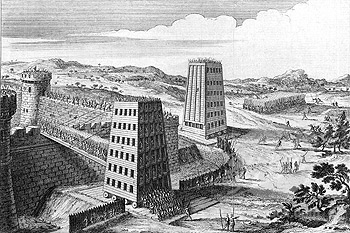
engraving from 18th century

Wartburg ( Eisenach/Thuringia ). Chamber of Elisabeth of Hungary - Life of Elisabeth of Hungary on mosaics ( 1902-1906 ): Elisabeth' husband Louis IV of Thuringia on crusade with Frederick II, Holy Roman Emperor.

Wartburg ( Eisenach/Thuringia ). Chamber of Elisabeth of Hungary - Life of Elisabeth of Hungary on mosaics ( 1902-1906 ): Elisabeth' husband Louis IV of Thuringia on crusade with Frederick II, Holy Roman Emperor.

Wartburg ( Eisenach/Thuringia ). Chamber of Elisabeth of Hungary - Life of Elisabeth of Hungary on mosaics ( 1902-1906 ): Elisabeth' husband Louis IV of Thuringia on crusade with Frederick II, Holy Roman Emperor.
Historical Overview
The Sixth Crusade (1228–1229), also known as the Crusade of Frederick II, was a military expedition to recapture Jerusalem and the rest of the Holy Land. It began seven years after the failure of the Fifth Crusade and involved very little actual fighting. The diplomatic maneuvering of the Holy Roman emperor and king of Sicily, Frederick II, resulted in the Kingdom of Jerusalem regaining some control over Jerusalem for much of the ensuing fifteen years as well as over other areas of the Holy Land. Frederick II's negotiations and power-sharing agreement and negotiation with envoys from al-Malik Al-Kamil of Egypt, which led to a shared Christian-Muslim governance situation in Jerusalem, made this Crusade different from the others. Frederick II carried out his maneuvers in 1228 while under excommunication from the Church by Pope Gregory IX.
Key Battles
Outcome & Quick Facts
Outcome
Strategic success.
Related Literature


1177 v. Chr.: Der erste Untergang der Zivilisation

Byzanz: Die erstaunliche Geschichte eines mittelalterlichen Imperiums

Das Mittelalter: Europa von 500 bis 1500

Die Karolinger

Im Mittelalter: Handbuch für Zeitreisende

Im Rausch des Vergnügens: Eine Reise in das England von Jane Austen und Lord Byron

Militärgeschichte des Mittelalters

Nach 1177 v. Chr.: Wie Zivilisationen überleben
Der ferne Spiegel: Das dramatische 14. Jahrhundert
Barbara Tuchman