Bosnian War
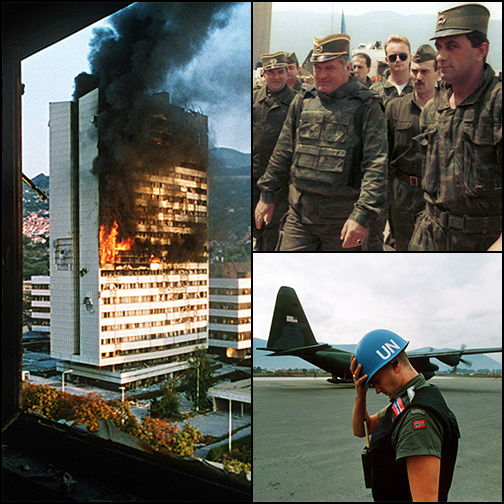
A combo picture shows different stories from the siege of Sarajevo in May, 1992, including convicted war criminal General Ratko Mladić (top right), UN peacekeepers at the airport in Sarajevo and the Executive Council Building (Zgrada Izvršnog Vijeća) in the centre of the city after it was hit by a Serb tank shell. Photo by Mikhail Evstafiev.
The original finding aid described this photograph as: Subject Operation/Series: JOINT ENDEAVOR Country: Bosnia And/I Herzegovina (BIH) Scene Camera Operator: SPC Matthew W. Suggs Release Status: Released to Public
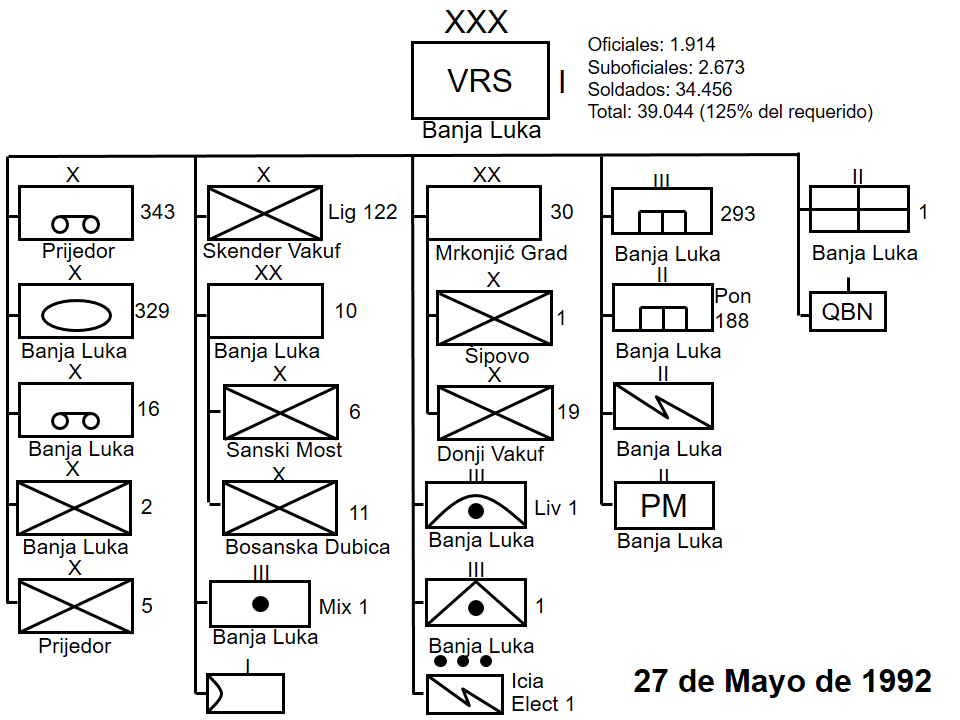
Confeccionado sobre la base del documento ICTY 1st Krajina Korps. Operational stricty confidential number 466-4. 26 de mayo de 1992

A Bosnian soldier is lifted off a medical transport bus by two airman and will be loaded on to a waiting C-141 to go to the United States.

Crew Chief Airman 1st Class Steven Jenkins (right), U.S. Air Force, watches as Capt. John O'Brien (left) settles into the cockpit of his A-10 Thunderbolt II at Aviano Air Base, Italy, in preparation for an Operation Deliberate Forge mission over Bosnia and Herzegovina on Feb. 5, 1999. The A-10, more commonly known as a Warthog, and its crew are attached to the 81st Fighter Wing from Spangdahlem Air Base, Germany. Deliberate Forge is the air support of Operation Joint Forge. DoD photo by Senior Airman Shane Cuomo, U.S. Air Force. (Released) 990205-F-0000C-005_screen.jpg

After Dark - episode 'Bloody Bosnia' - transmitted on 7 August 1993, hosted by Ian Kennedy with guests Fitzroy Maclean, Nikola Koljević, Gordana Knezević, Melanie McDonagh, Sean Gervasi, Amela, and Branka Magas.

Lieutenant Colonel Simon Porter and Lieutenant Colonel Tim Sweet, G-3 Operations SO1, works on a report for the commander at the Allied Command Europe Rapid Reaction Corps Headquarters located in the Sarajevo Suburb of Ilidza, Bosnia during Operation Joint Endeavor on May 3rd 1996.
The war in the Balkans (1991-1999) demonstrated dramatically the European dependence on the United States in military issues. The EU was paralyzed by the events in the Balkans and showed a startling incapacity to deal with this crisis. Even in 2005, some critics argue that, though the European Union (EU) has become an economic superpower, it is still a negligible player in the realm of security and defense issues. This thesis demonstrates that since 1998 the EU has developed a credible security and defense policy and the capabilities and the mindset successfully to conduct military missions. The thesis argues that the EU forces, EUFOR, will successfully implement the 1995 Dayton Accords in Bosnia and Herzegovina in the wake of NATO's Implementation and Stabilization Forces (IFOR/SFOR). Following an overview of the development of the European Security and Defense Policy (ESDP), the thesis highlights how the ESDP was put into practice for the first time during operation CONCORDIA in Macedonia in 2003. The thesis further examines the challenges that EUFOR has to face in Bosnia and Herzegovina today and it outlines the ways and means that the EU and EUFOR chose to deal with the challenges in the country. The thesis summarizes the findings to show how they support the argument that EUFOR will successfully implement the Dayton Accords and the implications of the topic for ESDP more generally. Subjects: Yugoslav War, 1991-1995; Bosnia and Hercegovina

Liberation of Žuč, Decembar 1992

Invert tree-line south of Sarajevo. The barren stretch represents the positions of the Serb forces' artillery and snipers, during their terror of Sarajevo in the 1993-1995 Bosnia Wars. The trees were cut to allow for bombardment and sniping against Sarajevo civilians.

March 23, 1994: Bosnia meeting in the Situation Room with United Nations Ambassador Madeleine Albright, National Security Advisor Tony Lake, Secretary of State Warren Christopher, Secretary of Defense William Perry, Joint Chiefs of Staff Chairman General John Shalikashvili, and others. (Credit: William J. Clinton Presidential Library) Hosted by the Clinton Library and the Clinton Foundation, the document release was spearheaded by CIA’s Historical Review Program (HRP), which identifies, collects and produces historically relevant collections of declassified materials. The Bosnia collection—the youngest ever released in HRP’s 20-year existence—is available online at www.cia.gov/library/publications/historical-collection-pu... A video recording of the symposium is available at www.clintonpresidentialcenter.org

A traffic sign showing the scars of the Bosnian War, on display in the Newseum, Washington, D.C.
This thesis examines the British involvement in the current Bosnian War by focusing on two specific policy determinants, strategic culture and national interests. The thesis assigns working definitions to these two concepts and then applies them to the Balkan conflict to determine how each has motivated the British decision to intervene in the current crisis. The thesis also provides a concise survey of the historical British interests in the Balkans, in support of this study. The thesis concludes that each concept has exerted some influence on British decision-making with respect to the Balkans. Indeed, strategic culture can wield considerable impact in the formation of British foreign policy. The narrowly defined concept of national interest that is employed in this work has also been a factor in British efforts in the current Balkan struggle, only to a lesser degree. Subjects: NA

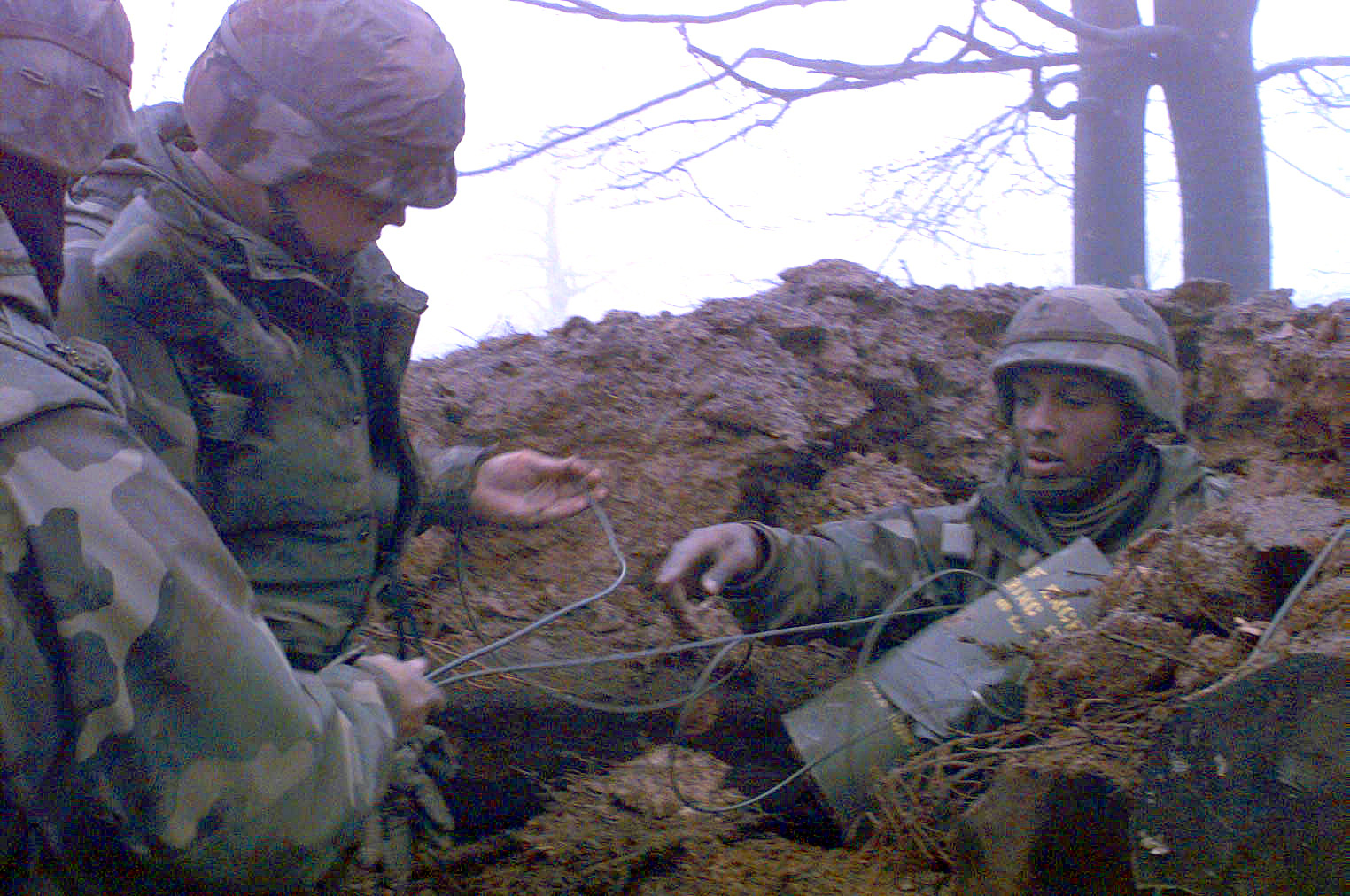
Four confiscated Serbian SA-7B MANPADS lie in a hole in the ground awaiting destruction by members of the 61st Ordnance Company (EOD) at a site near Route Delaware on the Zone of Separation (ZOS) in Bosnia-Herzegovina.
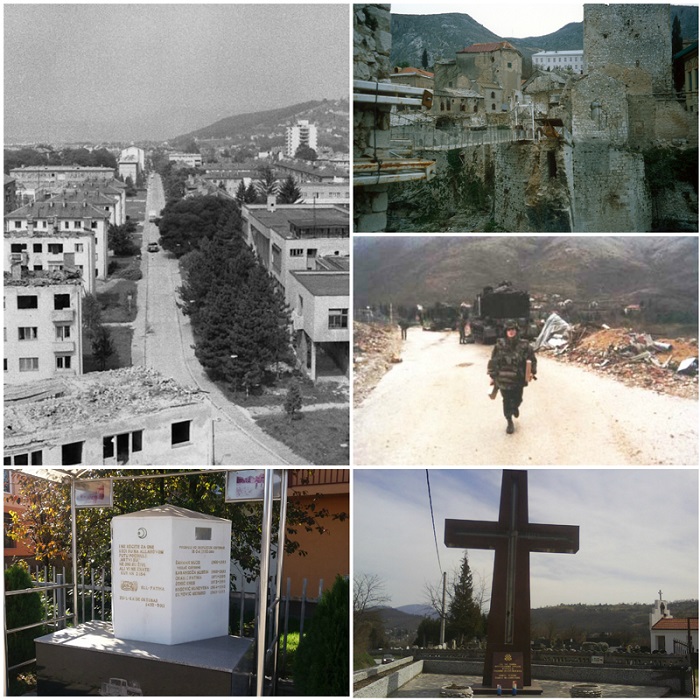
Top right: Stari Most in Mostar, replaced with a temporary cable bridgeMiddle right: French IFOR Artillery Detachment, on patrol near Mostar in 1995Bottom right: Croat war memorial in VitezBottom left: Bosniak war memorial in Stari Vitez (Mahala)Top left: View of a street in Novi Travnik during the war

The IFOR vehicles. The Implementation Force (IFOR) was a NATO-led multinational force in Bosnia and Herzegovina under a one year mandate from 20 December 1995 to 20 December 1996. Its task was to implement the military Annexes of The General Framework Agreement for Peace (GFAP) in Bosnia and Herzegovina.

U.S. Secretary of State Madeleine Albright greets the troops at Tuzla Air Base, Bosnia and Herzegovina, during her visit on Aug. 30, 1998. The troops are deployed to Tuzla in support of Operation Joint Forge.

Aerial photo depicting destroyed mosques around Foca, Bosnia and Herzegovina.

Evidence of shooting in the Dom Kulture in Pilica (Bajina Bašta), near Srebrenica, Bosnia and Herzegovina.

Prisoner exchange outside of Sarajevo in 1992.

Freiburg im Breisgau: Frauen demonstrieren gegen Vergewaltigungen in Bosnien

Freiburg im Breisgau: Frauen demonstrieren gegen Vergewaltigungen in Bosnien

Freiburg im Breisgau: Frauen demonstrieren gegen Vergewaltigungen in Bosnien

Freiburg im Breisgau: Frauen demonstrieren gegen Vergewaltigungen in Bosnien

Freiburg im Breisgau: Frauen demonstrieren gegen Vergewaltigungen in Bosnien
Historical Overview
The Bosnian War was an armed conflict that took place in Bosnia and Herzegovina, from 1992 until 1995. Following several earlier violent incidents, the war is commonly seen as having started on 6 April 1992 when the newly independent Republic of Bosnia and Herzegovina was internationally recognized. It ended on 21 November 1995 when the Dayton Accords were initialed. The main belligerents were the forces of the government of the Republic of Bosnia and Herzegovina, and those of the breakaway proto-states of the Republic of Herzeg-Bosnia and the Republika Srpska which were led and supplied by Croatia and Serbia, respectively.
Outcome & Quick Facts
Outcome
Draw.
Related Literature


Das Karfreitagsgefecht: Deutsche Soldaten im Feuer der Taliban | Was Soldaten der Bundeswehr in Afghanistan erlebt haben

Die Rückkehr des Krieges: Warum wir wieder lernen müssen, mit Krieg umzugehen

Leben und sterben lassen: Die letzten Tage der Bundeswehr in Afghanistan
