Second Balkan War
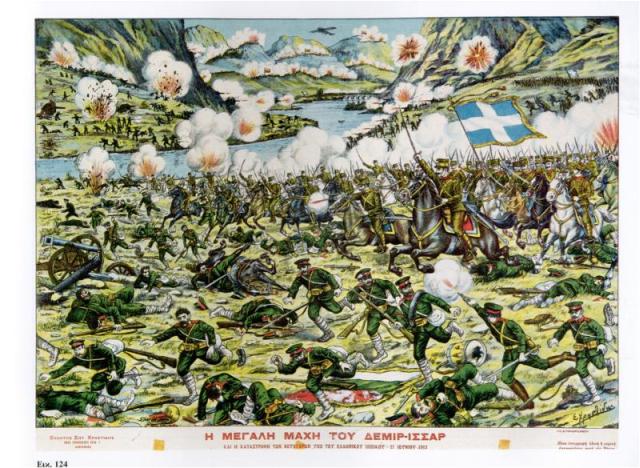
Attack of the Greek cavalry in Demir Hissar – Greek propaganda poster, 1913

Initial plan of operations

Bulgarian soldiers set fire and destroy Nigrita during the Second Balkan War
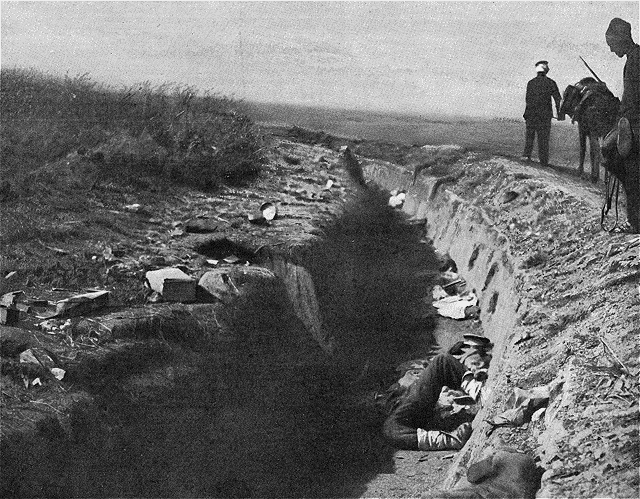
Empty Bulgarian trench following the Battle of Kilkis-Lahanas

Bulgaro-Macedonian refugees, expelled from Macedonia by Serbia prior to 1914.

The burned city of Kilkis after the Second Balkan War.

Campamento griego durante las Guerras Balcánicas.

Carte des Balkans en 1913 à l'issue de la Deuxième guerre balkanique, en français, d'après 1913.jpg et dans le style de of the Balkans (1913) - fr.svg mais en couleurs, sans les graphies allemandes et avec les frontières précisées.

Casas tiroteadas durante los combates por el control de Salónica entre griegos y búlgaros (que ocupaban la casa).

Casas tiroteadas durante los combates por el control de Salónica entre griegos y búlgaros (que ocupaban la casa).

Constantino de Grecia en su cuartel general en Hayi Beilik en 1913.

Second Balkan War. After delivering medical care in Cetinje, Montenegro during the Second Balkan War the Dutch Herman Koppeschaar, MD (with brassard) returns to the Netherlands with the staff of his field hospital . Amsterdam, Weesperpoort railway station, 26 April, 1913.

Tropas griegas en acción durante las Guerras Balcánicas.

Greece/Thrace: Greek occupation of Giumulzine (today Komotini, Greece). Stamp issued immediately after the 2nd Balkan War (1913). Overprint ΕΛΛ(ΗΝΙΚΗ) ΔΙΟΙΚ(ΗΣΙΣ) ΓΚΙΟΥΜΟΥΛΤΖΙΝΑΣ, the greek royal coat of arms and new value in greek currency on Ottoman stamp of 1909 issue. The seal of the house of Osman (tughra) stands out below the overprint
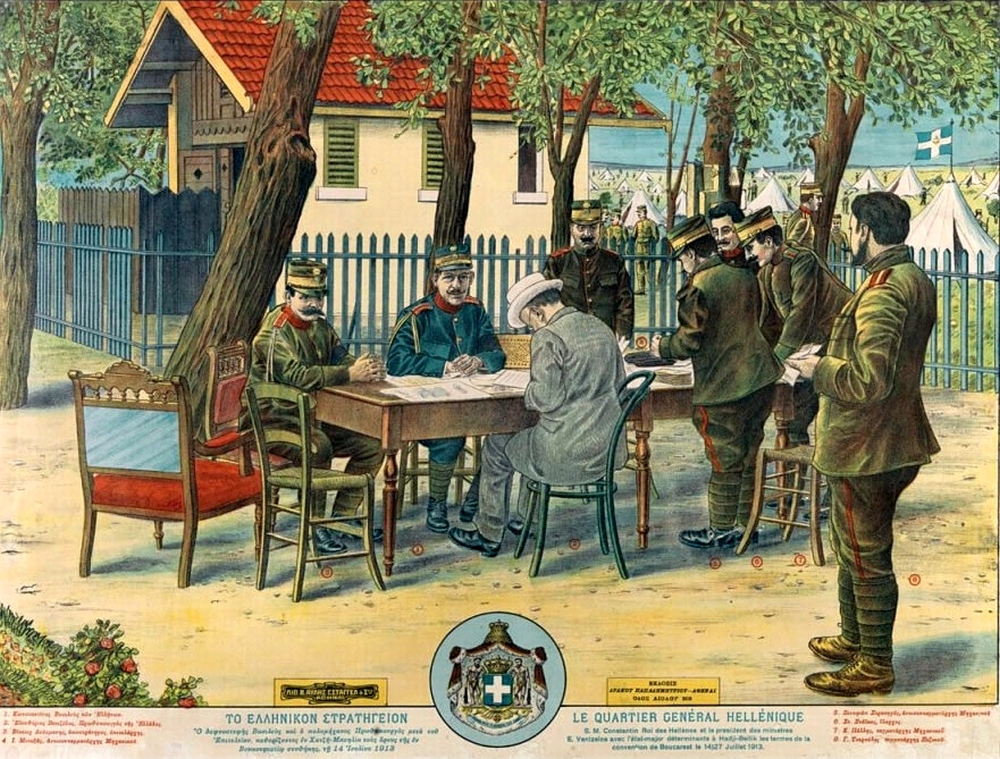
Lithograph inspired by this photograph from 14/27 July 1913. It shows the Greek General Headquarters at the end of the Second Balkan War in the village of Hadji-Beylik, conferring on Greece's demands prior to the Treaty of Bucharest. From left to right are depicted: Chief of Staff Major General Viktor Dousmanis, King Constantine I of Greece, Prime Minister Eleftherios Venizelos, Lt. Colonel (Engineers) Ioannis Metaxas, Major General Xenofon Stratigos, Captain (Cavalry) St. Staikos, Major (Engineers) Konstantinos Pallis, Major (Infantry) G. Tseroulis
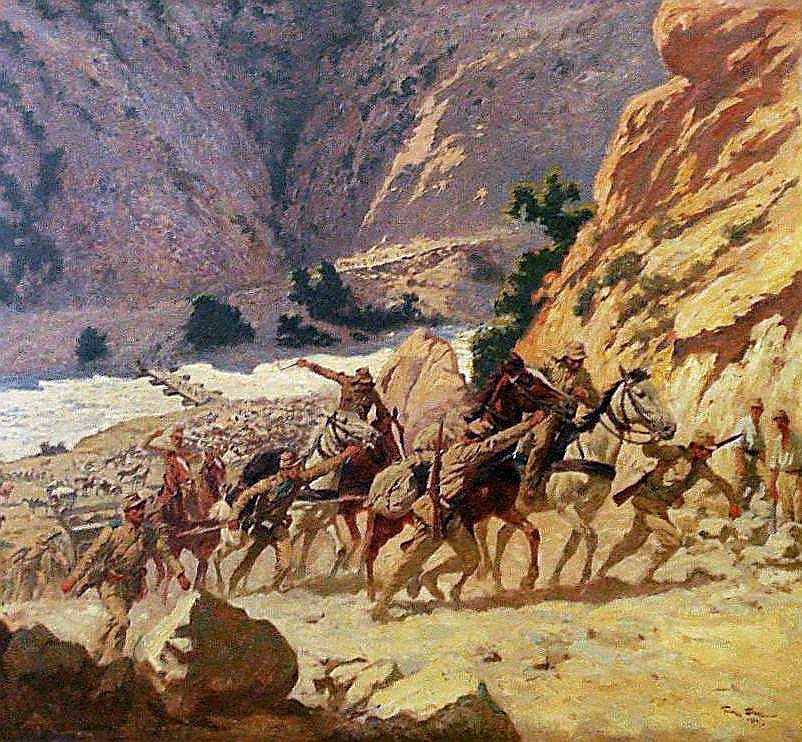
Greek artillery in the Kresna Straits, Bulgaria, during the Second Balkan War (1913)
Telegram from Pasic to London with the copy of the command of the Bulgarian High Command for a surprise attack on Serbia, and the state Division of Timok. (June 24, 1913) This media file is produced by Wikipedian in Residence in Category:Wikipedian in Residence at DARM in 2016.
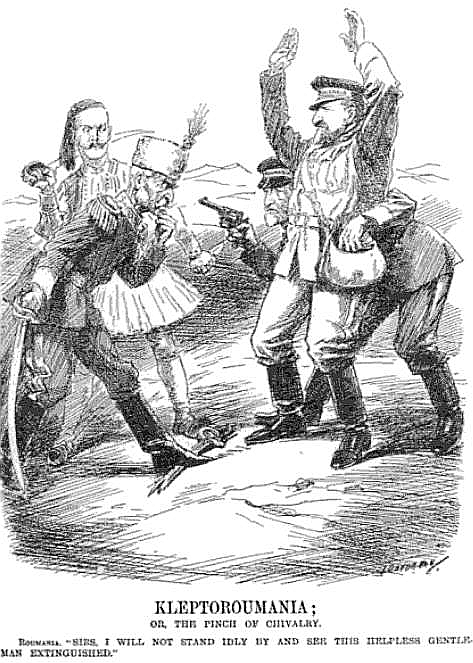
KLEPTOROUMANIA. Punch cartoon favourable to Bulgaria, the aggressor of the Second Balkan War. King Carol I of Romania points his pistol at King Petar of Serbia and King Constantine of Greece while he steals Southern Dobrudja from the helpless Tsar Ferdinand of Bulgaria. The title "KLEPTOROUMANIA" is a pun on kleptomania, the mental disorder of impulsive stealing for the sake of stealing. Roumania: "SIRS, I WILL NOT STAND IDLY BY AND SEE THIS HELPLESS GENTLEMAN EXTINGUISHED."

King Constantine I of Greece, Queen Sophie and Prime Minister Venizelos in Faliro, Athens, on 5th August 1913 to celebrate the end of the Second Balkan War
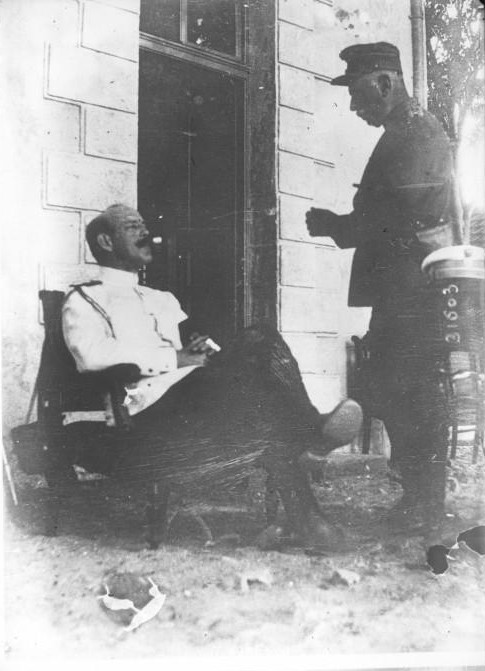
King Constantine of Greece (seated, with white tunic) chats with an officer on 19 June 1913, during the Second Balkan War

Roadside tombstone erected in memory of Milorad Z Lazic, a soldier that was killed in 1913 in the Second Balkan War. It is located in the village Svrackovci (municipality of Gornji Milanovac), Serbia.

Roadside tombstone erected in memory of Milorad Z Lazic, a soldier that was killed in 1913 in the Second Balkan War. It is located in the village Svrackovci (municipality of Gornji Milanovac), Serbia.

Roadside tombstone erected in memory of Milorad Z Lazic, a soldier that was killed in 1913 in the Second Balkan War. It is located in the village Svrackovci (municipality of Gornji Milanovac), Serbia.

Roadside tombstone erected in memory of Milorad Z Lazic, a soldier that was killed in 1913 in the Second Balkan War. It is located in the village Svrackovci (municipality of Gornji Milanovac), Serbia.

Roadside tombstone erected in memory of Milorad Z Lazic, a soldier that was killed in 1913 in the Second Balkan War. It is located in the village Svrackovci (municipality of Gornji Milanovac), Serbia.

Roadside tombstone erected in memory of Milorad Z Lazic, a soldier that was killed in 1913 in the Second Balkan War. It is located in the village Svrackovci (municipality of Gornji Milanovac), Serbia.
Historical Overview
The Second Balkan War was a conflict fought between the Tsardom of Bulgaria and its former Balkan League allies, Serbia, Montenegro and Greece, who were later joined by Romania and the Ottoman Empire.
Outcome & Quick Facts
Outcome
Serbian victory.
Related Literature


Frühling der Revolution: Europa 1848/49 und der Kampf für eine neue Welt
Christopher Clark
