Battle of Manila

The Seven Years' War (1756-63) was a world-wide conflict between Britain and France that also involved Spain as an ally of France. In 1762, the British sent Admiral William Draper, with an expeditionary force of some 2,000 European and Indian (Sepoy) soldiers, to attack Manila in the Spanish colony of the Philippines. The Spanish offered little opposition, and on October 2, 1762, the acting governor-general, Archbishop Manuel Antonio Rojo, surrendered the city. The British occupation lasted until 1764, when the Philippines reverted to Spanish control as part of the peace settlement. This map depicts where the British landed and the assault from the south. It shows the British warships (some of which are individually identified) and many other features, including roads, houses, churches, vegetation, and cultivated fields.

Image of signage outside of Postern of our Lady of Solutude in manila
[2],30p. ; 8̕

Capitulation of Manila, 1762 (J. Serra)
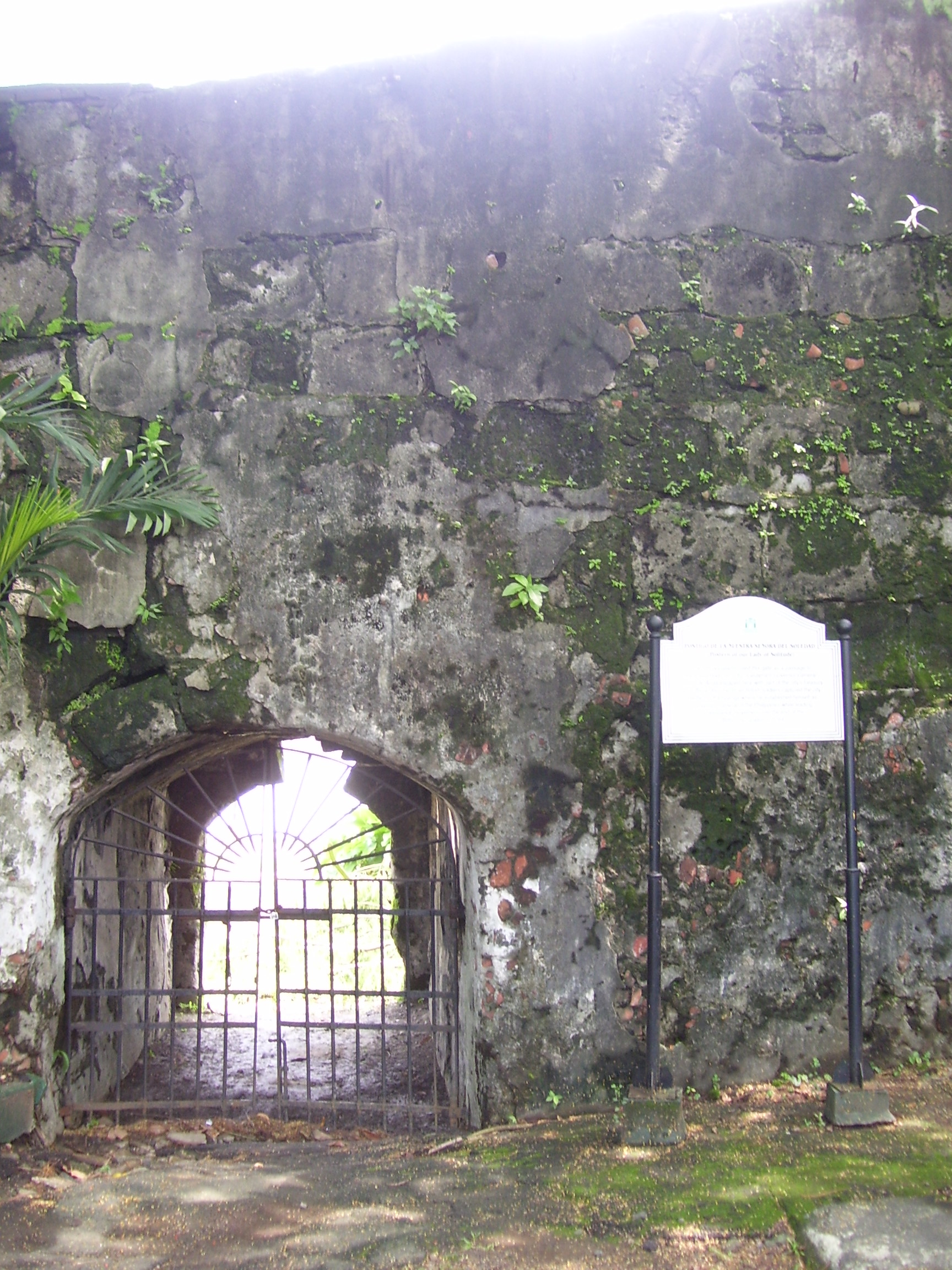
Fort Santiago Postern of Our Lady of Solitude, Manila, through which on 5 October 1762, Lieutenant Governor Simón de Anda y Salazar escaped the British bombardment during the conquest of Manila.

Plan of Manila Capital of the Philippines : taken by Storm October 6th 1762 by the English Army Commanded by Brigadier General Draper

Map of British Conquest of Manila in 1762 which lead to the British Occupation of Manila from 1762 to 1764 during the Seven Years War
!["Authorities consulted" : v. 1, p. [viii]
Subjects: India. Army. Engineers. Queen's Own Sappers and Miners](https://upload.wikimedia.org/wikipedia/commons/b/be/Siege_of_Manilla_in_1762_from_The_military_history_of_the_Madras_engineers_and_pioneers%2C_from_1743_up_to_the_present_time_%28page_106_crop%29.jpg)
"Authorities consulted" : v. 1, p. [viii] Subjects: India. Army. Engineers. Queen's Own Sappers and Miners

Sir William Draper KB (1721- Bath, January 8, 1787), was a British military officer who conquered Manila in 1762, but lost w:Minorca in 1782. He was involved in 1774 with a key meeting that agreed an early set of cricket rules including the w:leg before wicket rule.

Sir William Draper KB (1721-1787), was a British military officer who conquered Manila in 1762, but lost Minorca in 1782. He was involved in 1774 with a key meeting that agreed an early set of cricket rules including the leg before wicket rule.
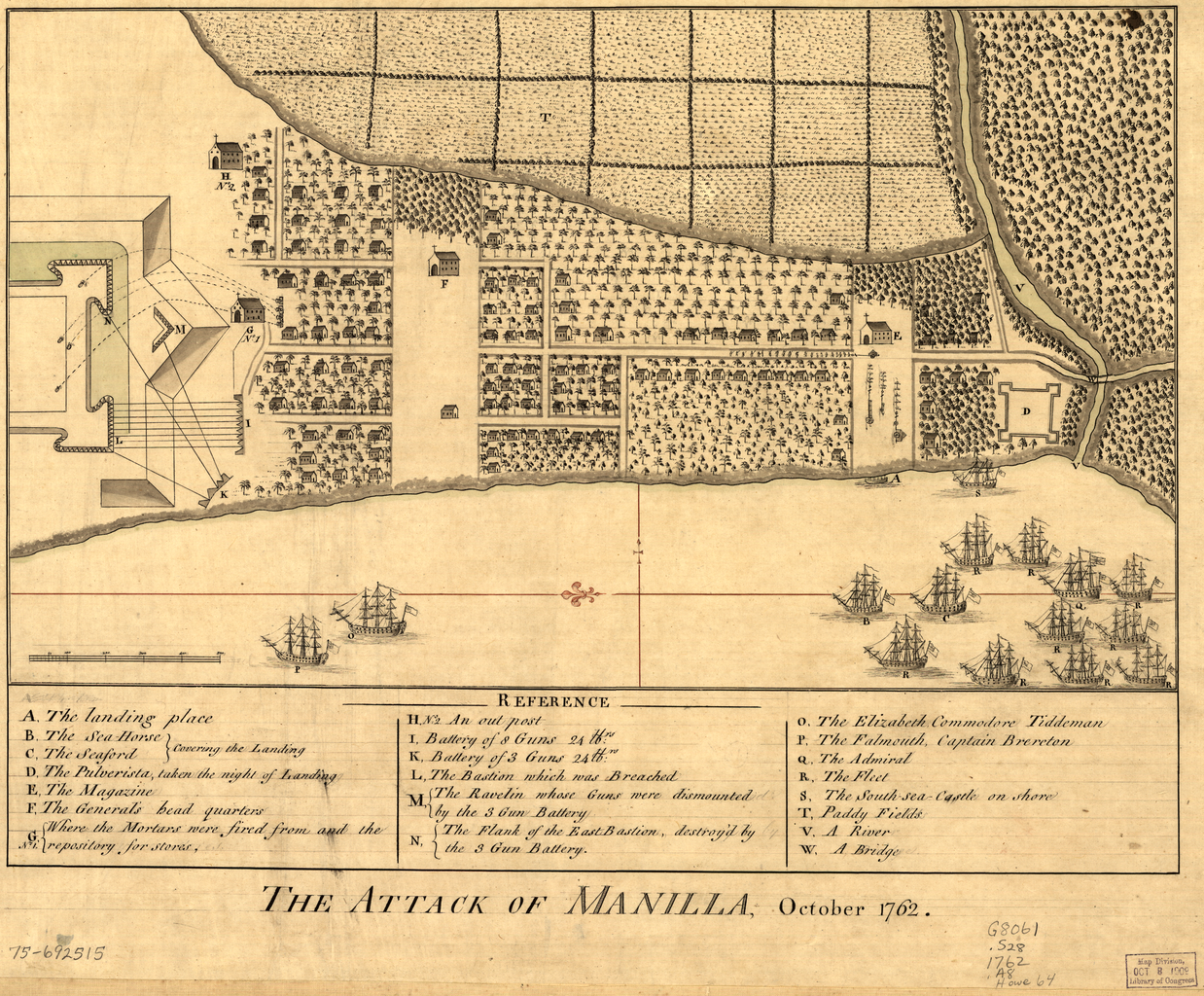
The Seven Years' War (1756-63) was a world-wide conflict between Britain and France that also involved Spain as an ally of France. In 1762, the British sent Admiral William Draper, with an expeditionary force of some 2,000 European and Indian (Sepoy) soldiers, to attack Manila in the Spanish colony of the Philippines. The Spanish offered little opposition, and on October 2, 1762, the acting governor-general, Archbishop Manuel Antonio Rojo, surrendered the city. The British occupation lasted until 1764, when the Philippines reverted to Spanish control as part of the peace settlement. This map depicts where the British landed and the assault from the south. It shows the British warships (some of which are individually identified) and many other features, including roads, houses, churches, vegetation, and cultivated fields.
Historical Overview
The Battle of Manila was fought during the Seven Years' War, from 24 September 1762 to 6 October 1762, between the Kingdom of Great Britain and the Kingdom of Spain in and around Manila, the capital of the Philippines, a Spanish colony at that time. The British won, leading to an eighteen-month occupation of Manila.
Quick Facts
British East India Company
- Commander: William Draper
- Strength: ca. 6.800
- Casualties: ca. 150
Kingdom of Spain
- Commander: Archbishop Manuel Rojo
- Strength: ca. 1.000
- Casualties: ca. 500
Strategic Context
Global attack on Spain to force a peace agreement.
Conflict / War
Seven Years' War
Historical Locations
Exact location not recorded in historical records