Perserkriege

Map of Achaemenid Empire, commonly known as First Persian Empire

Carte du monde grec pendant les guerres médiques (v. 500-479 av. J.-C.).

Map of Achaemenid Empire in Russian, 500 BC.

Map of Achaemenid Empire in Russian, 500 BC.

Map of Achaemenid Empire in Russian, 500 BC.

Achaemenid king fighting hoplites, Cimerian Bosphorus intaglio (composite) Reference
![Achaemenid king killing a Greek hoplite. A possible depiction of Xerxes killing Leonidas [1]. Full image with original cylinder on this page.](https://upload.wikimedia.org/wikipedia/commons/c/cd/Achaemenid_king_killing_a_Greek_hoplite.jpg)
Achaemenid king killing a Greek hoplite. A possible depiction of Xerxes killing Leonidas [1]. Full image with original cylinder on this page.

Anatolian soliers of Xerxes army. Left - hoplite from Ionia, right - hoplit from Lydia.
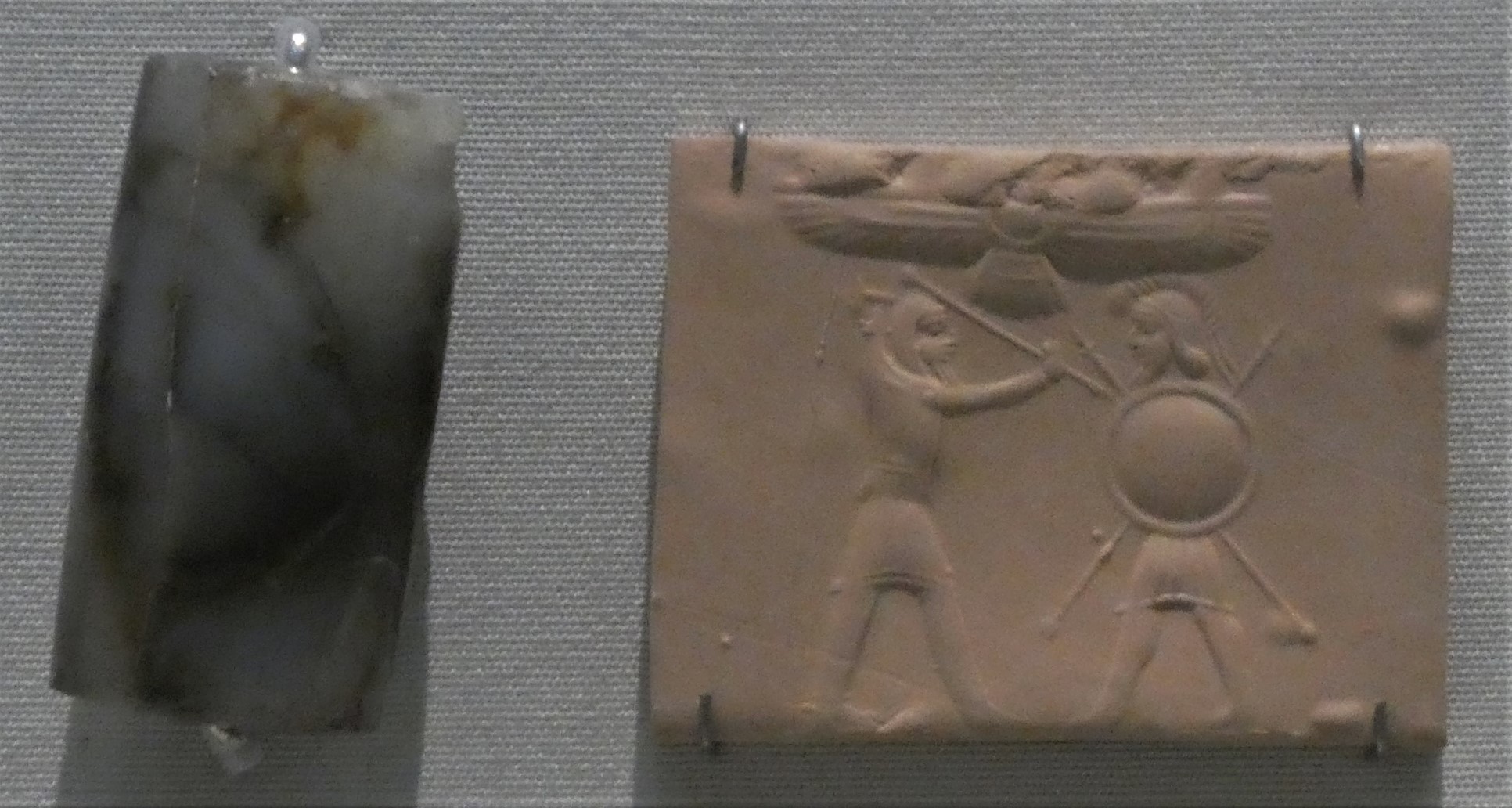
Cylinder seal, chalcedony; depicts a 'Median' (Persian) warrior, on the left, facing a Greek warrior, with hoplite equipment, stabbing him with a lance; above, a winged solar disk. Achaemenid period, 6th-4th century BC. British Museum BM 89333 https://www.britishmuseum.org/collection/object/W_1859-0301-89

Cylinder seal Persian stabbing Greek hoplite 89333

Darius Vase Battle between Greeks and Persians

Darius vase Persians fighting Greeks

Persian ship during greek-persian wars

A Greek slinger from the Greco-Persian Wars. Date of illustration : before 1904.
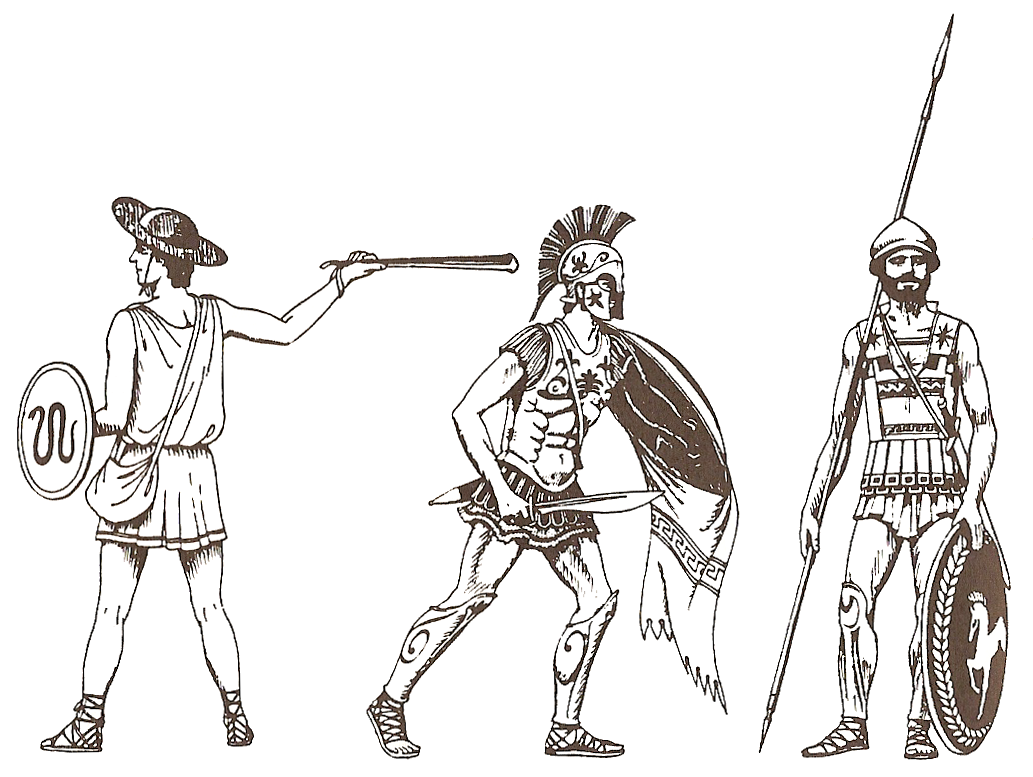
Greek soldiers of Greco-Persian Wars. Left - Greek slinger. Right - hoplites. Left hoplite's shield has a curtain which serves as a protection from arrows.

Greek soldiers of Greco-Persian Wars (reconstruction). Thessalian horseman and gymnites (γυμνίτης) – light-armed soldier with darts and bag with stones.

Greek hoplite and Persian warrior fighting each other. Depiction in ancient kylix. 5th c. B.C. National Archaeological Museum of Athens.
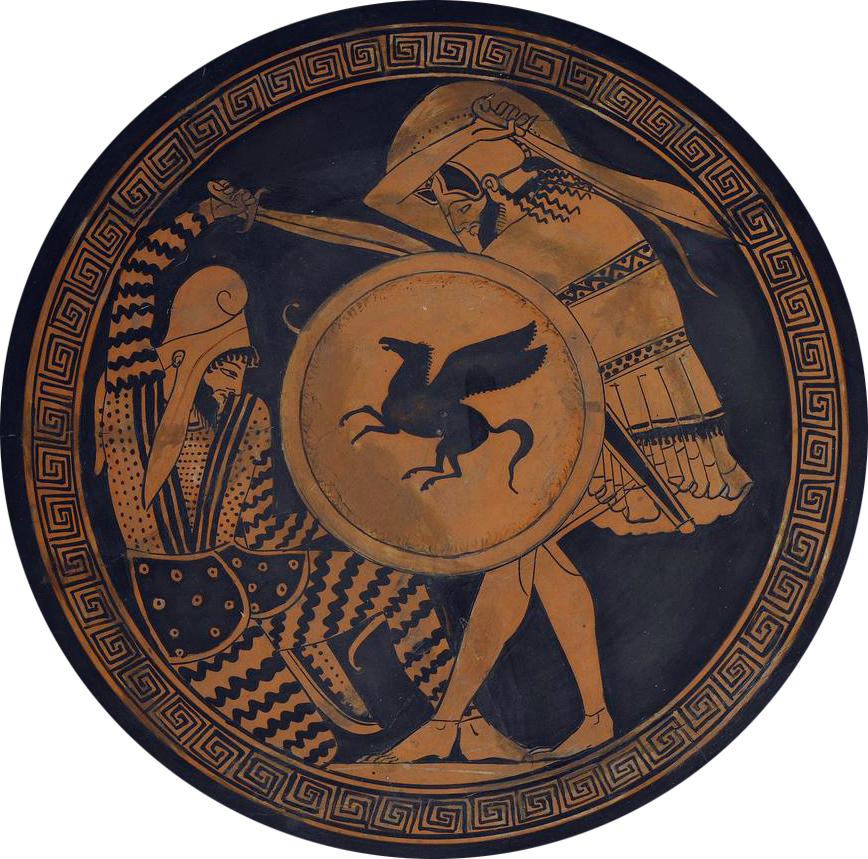
Greek hoplite and Persian warrior fighting each other. Depiction in ancient kylix. 5th c. B.C. National Archaeological Museum of Athens

Greek hoplite and Persian warrior fighting each other. Depiction in ancient kylix. 5th c. B.C. National Archaeological Museum of Athens

Greek soldiers of Greco-Persian Wars. Left - Greek slinger. Right - hoplites. Left hoplite's shield has a curtain which serves as a protection from arrows.

Persian ship during grego-persian war

Scaraboid with a Persian King Fighting a Greek Hoplite; Unknown; about 450 B.C.; Banded agate; 1.7× 1.2 × 0.7 cm (11/16 × 1/2 × 1/4 in.); 2019.13.9; No Copyright - United States (http://rightsstatements.org/vocab/NoC-US/1.0/) The Achaemenid Persian Great King drives a spear into a collapsing Greek hoplite on this scaraboid seal. The Greek is nude except for his crested Corinthian helmet, and he carries a shield and spear. The crown and long robe of the Persian king are carefully detailed. A bow and quiver are slung over his shoulder. The style of engraving suggests an origin in western Asia Minor, perhaps Sardis, and the gem was said to have been found in nearby Caria. Place: Achaemenid (Persian) Empire, Asia Minor (Place Created) Culture: Achaemenid (Persian Empire)

Greek, Attic; Nolan neck-amphora; Vases

Greek, Attic; Nolan neck-amphora; Vases

Greek, Attic; Nolan neck-amphora; Vases
Historische Übersicht
Der moderne Begriff der Perserkriege oder Persischen Kriege bezeichnet im weiteren Sinne die Auseinandersetzungen zwischen den „Hellenen und Barbaren“ in der Zeit zwischen dem Ionischen Aufstand und der Mitte des 5. Jhd. v. Chr. Im engeren Sinne verweist der Begriff auf die Feldzüge der Achämeniden unter den Großkönigen Dareios I. und Xerxes I. auf Griechenland, die in den Schlachten bei Marathon im Jahr 490 v. Chr. sowie bei Salamis und Plataiai im Jahr 480/479 v. Chr. abgewehrt wurden. Keine Anwendung findet der Begriff der „Perserkriege“ auf spätere militärische Konflikte des „Abendlandes“ mit den Persern, wie etwa den Peloponnesischen Krieg, in den auch die Perser involviert waren, oder die Kriege zwischen Rom und den Parthern oder den Sassaniden.
Teilkonflikte
Wichtige Schlachten
Battle of Lade
494 BCTürkei
Battle of Artemisium
480 BCGriechenland
Battle of Mycale
479 BCTürkei
Battle of the Eurymedon
466 BCTürkei
Ergebnis & Fakten
Ergebnis
Persischer Sieg; Zerstörung von Milet.
Weiterführende Literatur

GOLDSWORTHY:ROMAN ARMY AT WAR 100BC-AD200

Auf dem Weg zum Imperium: Eine Geschichte der römischen Armee

Aufstieg und Fall des Alten Ägypten: Die Geschichte einer geheimnisvollen Zivilisation vom 5. Jahrtausend v. Chr. bis Kleopatra


Das alte Griechenland: Die visuelle Geschichte. Hochwertiger Bildband mit über 850 Fotos

Das frühe Persien: Geschichte eines antiken Weltreichs

Die verdammt blutige Geschichte der Antike: ohne den ganzen langweiligen Kram

Eine unerzählte Geschichte der Antike: Auf den Spuren vergessener Orte – von Britannia bis Vietnam

Feldherren, Krieger und Strategen: Krieg in der Antike von Achill bis Attila

Geschichte der römischen Kaiserzeit: Von Augustus bis zu Konstantin

Geschichte der römischen Republik: Von den Anfängen bis Augustus

Gladius: Roms Legionen in Germanien

Krise und Untergang der römischen Republik


Römische Geschichte: 5 Bände im Schuber

Römische Geschichte: Von den Anfängen bis zum Untergang
