Haitian Revolution
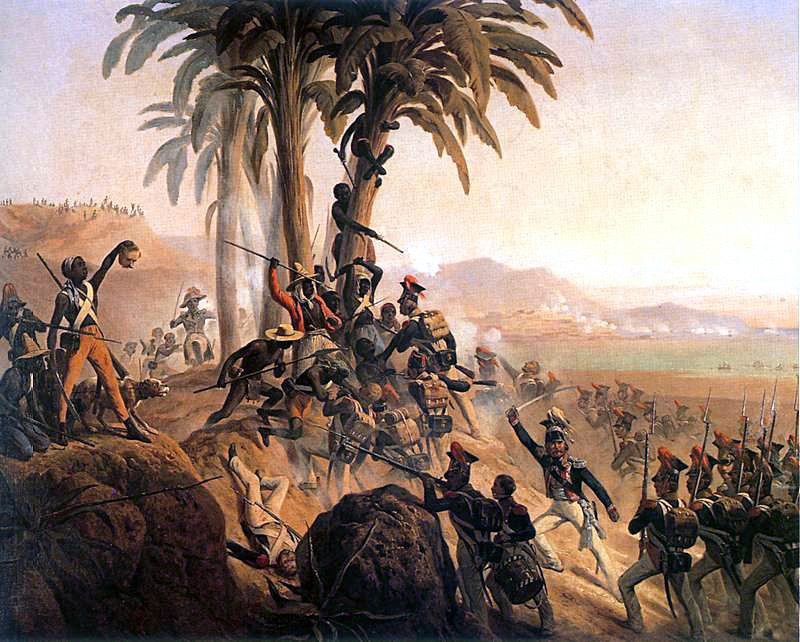
Battle of San Domingo, also known as the Battle for Palm Tree Hill

General notes: Painting.

Toussaint Louverture reçoit une lettre du Premier Consul, par Charles Monnet. Rueil-Malmaison in 69 dessins pour l'illustration de l'Histoire de France sous l'Empire de Napoléon le Grand. 1802, Plume, encre noire, lavis noir. Format : H. en m. 0.135 ; L. en m. 0.101.

Plan de la ville du Cap Francais

A French propaganda engraving from 1825 depicts King Charles X bestowing independance on the colony of Saint-Domingue.

Proclamation écrite par Toussaint Louverture après l'insurrection en 1801 du général Moïse, ancien esclave comme lui de l'Habitation Bréda.
Nous, Étienne Polverel (1738-1794) et Léger-Félicité Sonthonax (1763-1813), commissaires civils de la République, délégués aux Iles françaises de l'Amérique sous le vent, pour y rétablir l'ordre et la tranquillité publique.- Proclamation au nom de la République française".

Battle of Vertières

Blood Hounds attacking a Black Family in the Woods - in Marcus Rainsford, An Historical Account of the Black Empire of Hayti. Londres J. Cundee, 1805. Coll. New York Public Library, cote Sc Rare 972.94-R.

Captain Marcus Rainsford Signature

Captain Marcus Rainsford Signature

Captain Marcus Rainsford Signature

Cellule de Toussaint Louverture au fort de Joux - plaque du président Marthély : Au nom du peuple haïtien, en hommage au général François Dominique Toussant Louverture né le 20 mai 1743 sur l'habitation Bréda à Saint Domingue, grand défenseur des idées et idéaux de la Révolution de 1789, précurseur de l'indépendance nationale de 1804, mort dans ce cachot du fort de Joux le 7 avril 1803 la Patrie reconnaissante Le samedi 1er novembre 2014 Michel Joseph Marthély Président de la république d'Haïti

Christophe commander of the army, roams the island of Saint-Domingue, burning and killing its unfateful settlers. General Henri Christophe burned the town of Port Republicain (Port-au-Prince) in 1802 to counter the arrival of Napoleonic troops. Engraving made by Manuel López López to illustrate the book of bonapartist pamphleteer Louis Dubroca, 1806.

Citadelle La Ferrière, Haiti. 50,000 cannonballs wait to fly.

Citadelle La Ferrière, Haiti. Built to withstand assault by Napoleon's army

The Citadelle Laferrière, near Milot in Haiti : the back wall.

The Citadelle Laferrière, near Milot in Haiti : guns and bullets at the rear.
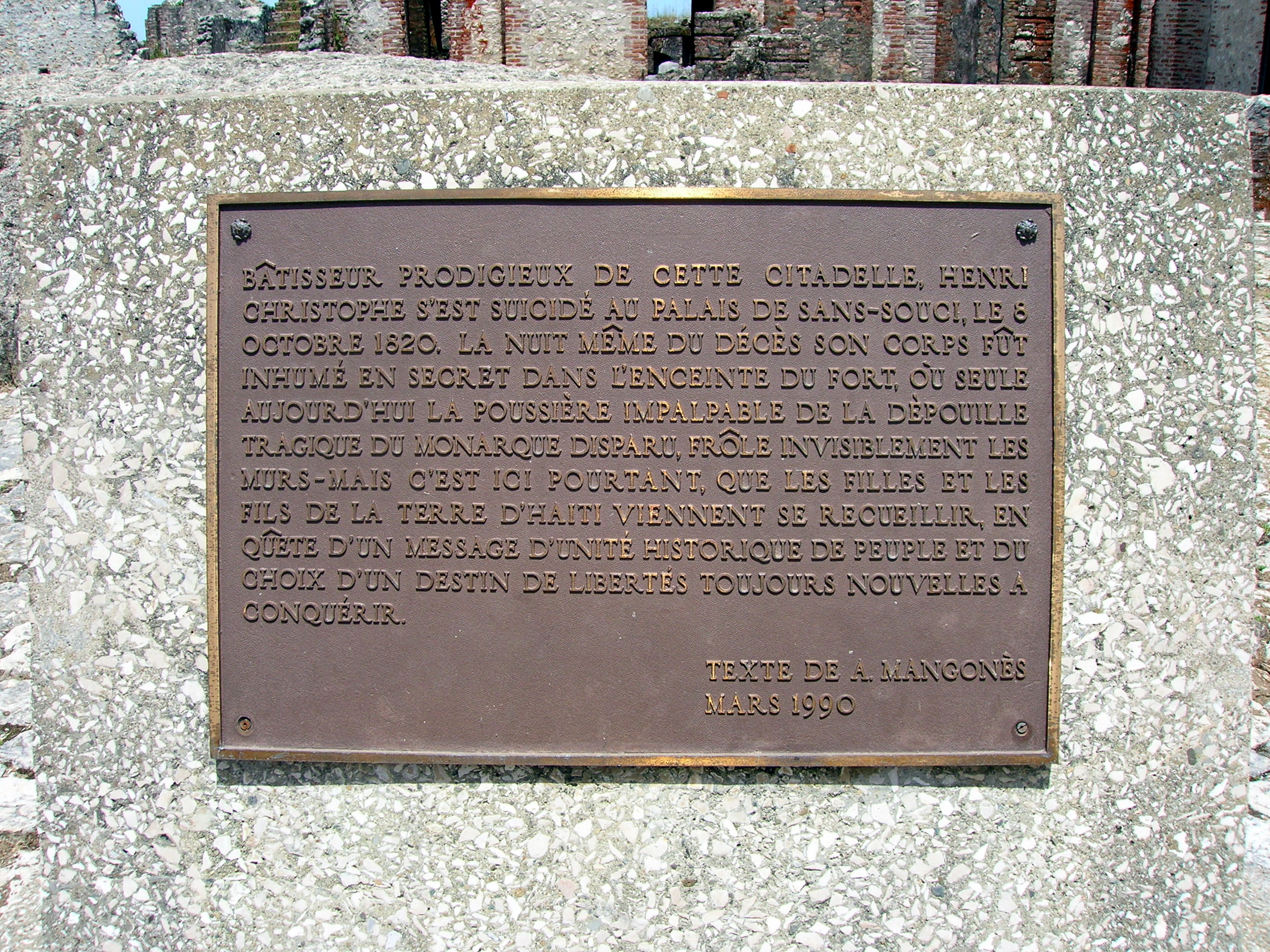
The Citadelle Laferrière, near Milot in Haiti : the sign commemorating Henri Christophe's death.

Page de titre de la constitution de la colonie française de Saint-Domingue, 8 juillet 1801

Courrier de Toussaint Louverture adressé à Rochambeau.
The French Revolution of 1789 had enormous repercussions in France’s Caribbean colonies. In August 1791, slaves in the colony of Saint-Domingue staged a massive revolt, setting in train the chain of events that ultimately led to the founding of Haiti in 1804. In 1792, the de facto government of revolutionary France sent commissioners to the colony to enforce a decree by the National Assembly that enfranchised free blacks and mulattoes, but that did not yet free the colony’s slaves. Under growing pressure from the revolt and threatened by invading British forces, in late 1793 commissioner Léger Félicité Sonthonax issued a decree freeing the slaves. An estimated 10,000 French settlers from Saint-Domingue fled to the United States, where many of them agitated for the return of their colonial properties. This work of 1796, in French but published in Philadelphia, is an appeal for the protection and restoration of the former colonists’ rights. It is written with reference to the principles in the Declaration of the Rights and Duties of Man and of the Citizen, drafted by the National Convention and put into effect on October 26, 1795, as a modified version of the original Declaration of the Rights of Man and of the Citizen, adopted by the National Assembly in August 1789. France--Colonies; Politics and government; Slavery
Deklarasyon Endepandans Ayiti. Haitian Declaration of Independence poster. Document MFQ 1/184. National Archives, U.K.
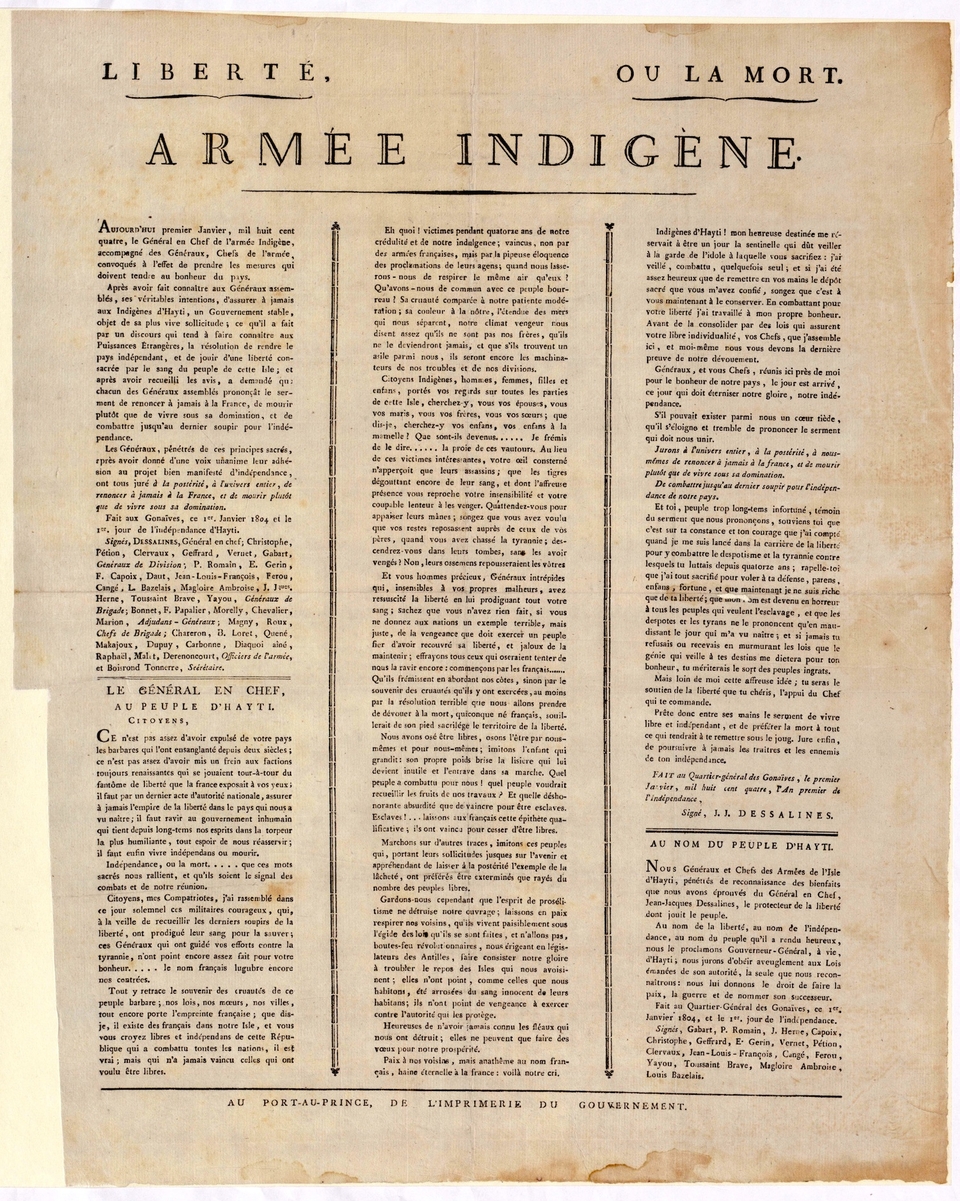
Deklarasyon Endepandans Ayiti. Haitian Declaration of Independence poster. Document MFQ 1/184. National Archives, U.K.
Historical Overview
Successful slave revolt (1791–1804) leading to the independence of Haiti.
Outcome & Quick Facts
Outcome
Tactical French victory; strategic Haitian success.

